A species
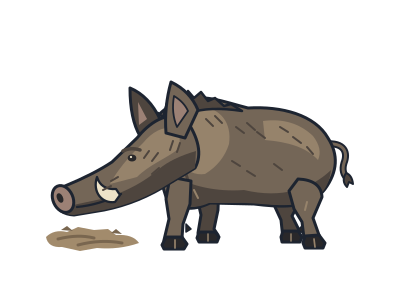
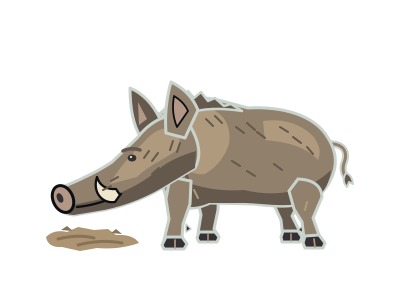
Wild boar
Sus scrofa
The farm pig’s wild ancestor, with a worldwide family.
You and the wild boar meet in the Placental mammals branch, shown at about 95 million years ago (on 23 December, in a calendar from life's shared ancestor to today).
The wild boar is the wild ancestor of the farm pig. Together with descendants spread by people, it now lives on every continent except Antarctica. That worldwide story includes pigs descended from escaped farm animals, not just introduced wild boar.
Its wider family-tree branch holds some surprising company: camels, cattle, hippos and even whales. But looking alike does not always mean being closest relatives. Despite their pig-like shape, hippos are more closely related to whales than to pigs.
A strong neck and long snout help wild boar plough through soil for food. Most of their meals are plants, including roots, bulbs, seeds and nuts. They also eat earthworms, insects, eggs and small animals. Females and their young live in groups called sounders, while adult males generally live alone outside the mating season. The females help protect the piglets. When a group travels, adults can walk at the front and back, with the young between them.
Mud helps them cool down
Wallowing in water or mud helps wild boar keep cool.
Females have tusks too
Their tusks are usually less obvious than those of mature males.
A nest for newborns
Before giving birth, a female builds a nest from vegetation.
Next to it on the tree
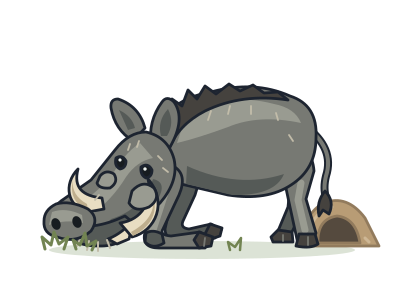
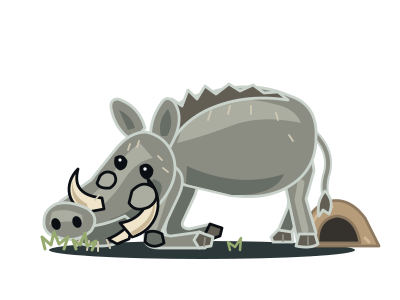
- Common warthogKneels on padded wrists to graze and backs into shelter rear-first, leaving tusks facing the entrance.
- Domestic pigTamed from wild boar about 10,000 years ago; pigs are quick learners that can recognise their own names.
- North Sulawesi babirusaA pig whose male tusks grow up through the top of its snout and curve back toward its face.
- Collared peccaryA pig-like animal of the Americas that lives in herds and marks friends by rubbing scent glands.