A species
Common warthog
Phacochoerus africanus
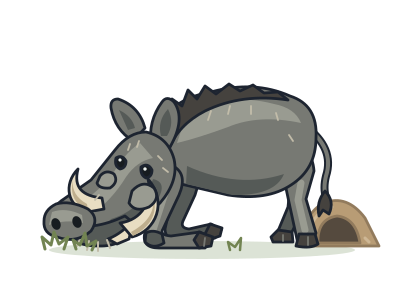
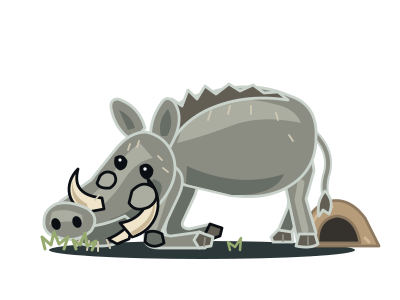
A kneeling grazer that backs into safety, tusks facing out.
You and the common warthog meet in the Placental mammals branch, shown at about 95 million years ago (on 23 December, in a calendar from life's shared ancestor to today).
A common warthog kneels to graze and backs into burrows with its tusks facing outwards—not going in first. It belongs to the pig family, alongside wild boar. Look further along its wider branch of the mammal tree and you will also find camels, llamas, hippos and, surprisingly, whales.
To reach short grass, it lowers the front of its body into a kneeling position. It can then shuffle forwards between mouthfuls without standing up. Those front “knees” are actually wrist joints, cushioned by thick pads of hardened skin.
Adults reverse into shelter rear-first, leaving their heads and tusks facing the entrance. This puts their defences towards any animal following them inside. They commonly use abandoned aardvark burrows rather than digging a whole home themselves. These underground shelters offer protection from predators, daytime heat, night-time cold and rain.
Tail up
A running warthog holds its thin tail upright, with the hairy tip hanging down.
Company varies
Females may live alone or in small groups, often with their young. Adult males commonly live alone.
A varied voice
Warthogs communicate through grunts, growls, snorts and squeaks, as well as touch and scent.
Next to it on the tree
- Wild boarThe farm pig’s wild ancestor; wild boar and human-spread descendants occur worldwide except Antarctica.
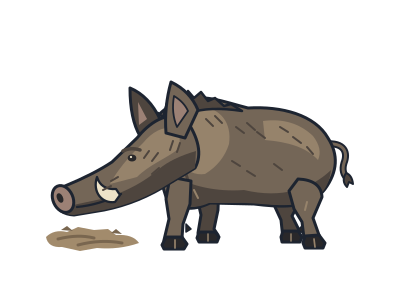
- Domestic pigTamed from wild boar about 10,000 years ago; pigs are quick learners that can recognise their own names.
- North Sulawesi babirusaA pig whose male tusks grow up through the top of its snout and curve back toward its face.
- Collared peccaryA pig-like animal of the Americas that lives in herds and marks friends by rubbing scent glands.