A species
Whale shark
Rhincodon typus
A bus-sized shark with a taste for tiny food.
You and the whale shark meet in the Jawed vertebrates branch, shown at about 465 million years ago (on 21 November, in a calendar from life's shared ancestor to today).
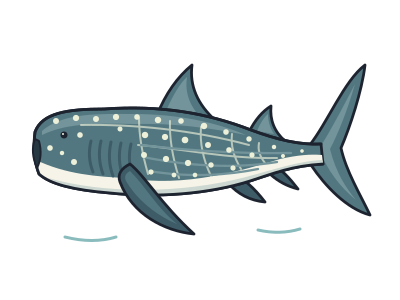
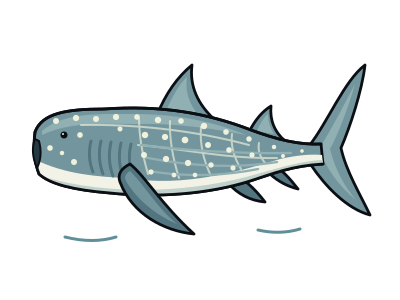
The whale shark is the biggest fish alive. Large individuals can be as long as a bus, yet they eat plankton: drifting living things, many of them tiny. They are generally harmless to people and usually calm around divers. Despite the name, this giant is a shark, not a whale.
Its relatives include nurse sharks and wobbegongs, fellow members of the carpet-shark group. Those relatives mostly live near the seabed. Whale sharks live in warm seas around the world, both in open water and near coasts. Pale spots and crossing stripes cover their darker backs, while their bellies are white.
An enormous mouth helps gather small meals. A whale shark separates food from seawater inside its mouth. Water leaves through the gills, while food continues towards the throat. Meals include tiny shrimps, fish eggs and small fish that swim in groups. Being the biggest fish does not mean hunting the biggest prey.
Deep divers
Although often seen near the surface, whale sharks can dive more than a kilometre deep.
Ocean travellers
Their journeys can cover thousands of kilometres and cross between countries’ waters.
In need of protection
The whale shark is globally classified as Endangered.
Next to it on the tree
- Nurse sharkRests in heaps on the sea floor by day, then slurps up prey with a powerful suction mouth.
- Tasselled wobbegongA flat shark fringed with a beard of branching tassels that makes it vanish against the reef.
- Epaulette sharkWalks across reef flats on its fins at low tide and copes with very little oxygen.