A species
Common vampire bat
Desmodus rotundus
A tiny blood-drinker that shares its supper with hungry roost-mates who have helped it before.
You and the common vampire bat meet in the Placental mammals branch, shown at about 95 million years ago (on 23 December, in a calendar from life's shared ancestor to today).
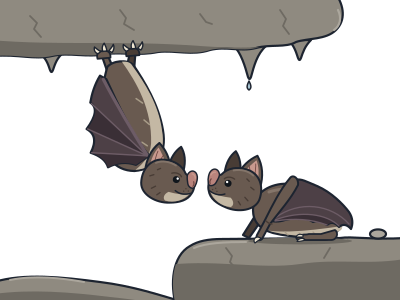
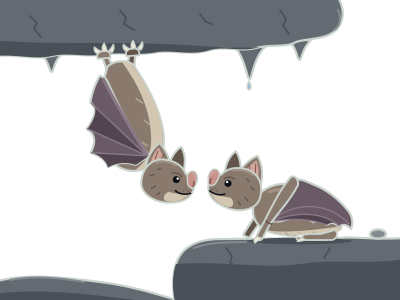
A vampire bat that comes home hungry is not left alone. Its roost-mates often bring back up some of their own blood meal to feed it. This matters, because a bat that misses its meal for about two or three nights can starve. Sharing works like insurance: help a neighbour tonight, and they may help you next time.
In a three-year study of captive bats, the best guide to how much a bat gave a partner was how much that partner had given it. In that colony, most sharing pairs were not even related. Bats seem to remember who helped them, and some refused to help bats that had turned them down before. In another experiment, bats that had shared with many others found more helpers when their usual donors could not help.
This bat is small and does not suck blood. It makes a tiny cut with its very sharp front teeth and laps up the blood, mostly from cattle and horses. It rarely bites people. Its neighbour on the tree, the grey-headed flying fox, feeds mainly on nectar and pollen from flowers, and on fruit. Surprisingly, bats are not close cousins of mice. They belong to a big group of mammals that also includes cats, dogs, horses and whales.
Fewest teeth of any bat
It has only 18 teeth, fewer than any other bat. Its upper front teeth have no enamel, which keeps them razor sharp.
A thumb on each wing
Each wing has a strong, clawed thumb. The bat uses it to climb onto the animal it feeds from and to help push off into the air.
Small, close groups
Females usually roost in close groups of about 8 to 12 and groom one another.
Next to it on the tree
- Common pipistrelleA bat small enough to fit in a matchbox that can eat thousands of tiny insects in a night.
- Little brown batA common North American bat that can live more than 30 years, remarkable for its size.
- Mexican free-tailed batMillions pour out of Texas caves at dusk, and it is among the fastest flying animals.
- Greater bulldog batA fishing bat that rakes the water surface with long clawed feet to catch fish.
- Lesser long-nosed batA nectar-drinking bat that pollinates desert cactus and the agave plants used for tequila.
- Lesser short-tailed batBats are New Zealand's only native land mammals; this one scurries on the forest floor.