An extinct species
Stupendemys †
Stupendemys geographica
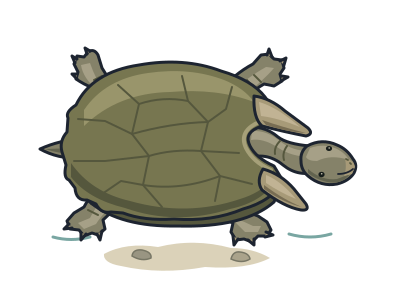
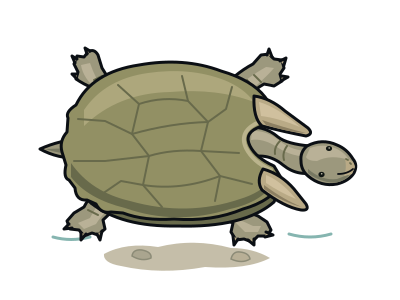
A river giant with horns on its shell.
Lived about 13–7 million years ago.
You and the stupendemys meet in the Amniotes branch, shown at about 320 million years ago (on 4 December, in a calendar from life's shared ancestor to today).
A car-sized river turtle with horns on its shell, this giant was a relative of much smaller freshwater turtles living in the Amazon region. It belonged to a group called side-necked turtles, which tucked their necks sideways beneath their shells. It lived about 13 to 7 million years ago.
Fossil shells showed two stout horns pointing forwards and slightly downwards beside the neck. These horns grew from the shell, not the head. Other shells lacked horns. Its broad shell had a deep notch at the front, and comparisons between fossils indicated that the shell became flatter as the turtle grew.
Its home stretched across rivers, lakes and vast wetlands in northern South America. Important shell and jaw fossils came from Venezuela and Colombia. Some fossil sites in Venezuela were humid wetlands when it lived, rather than the dry landscapes seen there today. Giant caimans, relatives of crocodiles, shared those ancient waterways.
A tooth left behind
One fossil shell preserved a crocodile relative's tooth attached to its underside.
Under a metre
One smaller fossil shell measured less than a metre long.
Named in the 1970s
Scientists first described this giant turtle in the 1970s.