A species
Atlantic salmon
Salmo salar
Born in a river, grown at sea, guided home by familiar smells.
You and the atlantic salmon meet in the Bony fish and their descendants branch, shown at about 430 million years ago (on 24 November, in a calendar from life's shared ancestor to today).
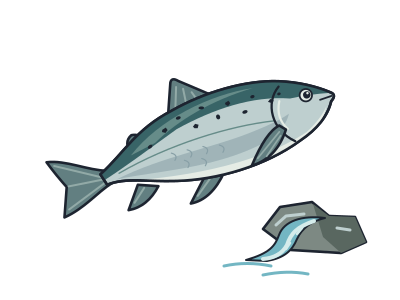
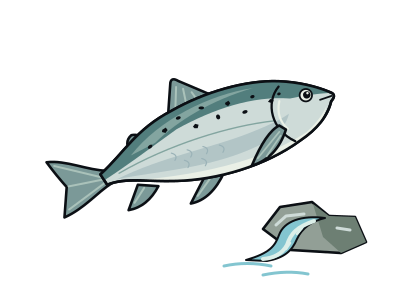
Most Atlantic salmon hatch in rivers, grow at sea, then head home upstream to breed. Along the way, they can leap over waterfalls. These travellers belong to the same fish family as trout, char and grayling. Their lives connect freshwater streams with the open ocean, rather than staying in just one watery world.
Young salmon learn their river’s particular smell before leaving for sea. Remembering that smell helps returning adults find their birth river, sometimes even their original stream. It is not a perfect system: some enter other rivers. Smell helps with finding home, but scientists do not yet fully understand how salmon navigate the whole journey.
The sea offers more plentiful, energy-rich food, helping salmon grow much faster than in rivers. Young river fish eat insects and other small animals. At sea, larger salmon hunt fish, including Atlantic herring—another fish shown nearby on this tree. Returning adults travel upriver to lay and fertilise eggs, starting the river-to-sea story again.
Some never leave freshwater
Landlocked populations live in freshwater lakes rather than travelling to sea. They generally stay smaller.
Breeding need not be the end
Atlantic salmon can survive breeding and return to breed again, although many die after their first breeding season.
An upstream journey without meals
Returning adults stop feeding in freshwater. Stored energy powers their journey upriver.
Next to it on the tree
- Rainbow troutFarmed and stocked worldwide; the sea-going form, called steelhead, is the same species.
- Sockeye salmonTurns bright red with a green head for its last journey upriver, feeding bears and forests.
- Northern pikeA long, still ambusher of weedy lakes all round the north, nicknamed the water wolf.