A species
Sunda pangolin
Manis javanica
A scaly mammal that rolls into an armoured ball, and a surprising cousin of cats and dogs.
You and the sunda pangolin meet in the Placental mammals branch, shown at about 95 million years ago (on 23 December, in a calendar from life's shared ancestor to today).
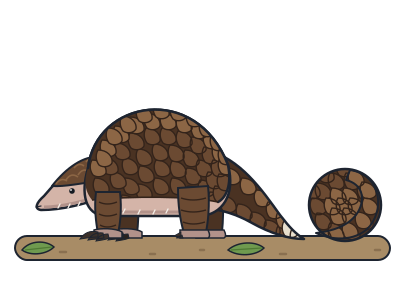
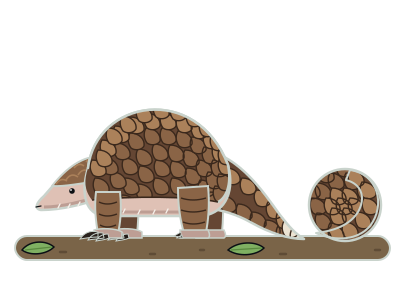
The Sunda pangolin is a mammal in a suit of armour. About 900 to 1,000 overlapping scales cover almost its whole body, laid like tiles on a roof. They are made of keratin, the same stuff as your fingernails. Its face and soft underside have no scales, just a few thin hairs. When danger comes, it curls into a tight ball with its belly tucked safely inside.
With its long snout and diet of ants, it looks a lot like an anteater. For a long time scientists grouped pangolins with anteaters and armadillos. DNA studies later turned up a surprise: the closest living relatives of pangolins are the carnivorans, the group that includes cats, dogs and bears. Pangolins evolved their ant-eating look separately.
It lives in forests, plantations and even gardens across Southeast Asia. It lives alone and comes out at night. It has poor eyesight, so it sniffs out ant and termite nests, rips them open with strong front claws and licks up the insects with a long, sticky tongue. It has no teeth at all.
Rolling into a ball helps protect it from wild hunters such as leopards, but people can simply pick the pangolin up. It is now Critically Endangered and is the mammal found most often in illegal wildlife trade in Asia.
Heavy armour
Its scales make up about a fifth of its body weight.
Tail-riding babies
A mother usually has one baby at a time. The baby rides around on the base of her tail.
Tree climber
It climbs well and grips branches with its tail. By day it rests in tree holes or burrows.