A species
Lamp shell
Lingula anatina
A clam lookalike from an ancient group of mud-burrowers.
You and the lamp shell meet in the Two-sided animals branch, shown at about 580 million years ago (on 11 November, in a calendar from life's shared ancestor to today).
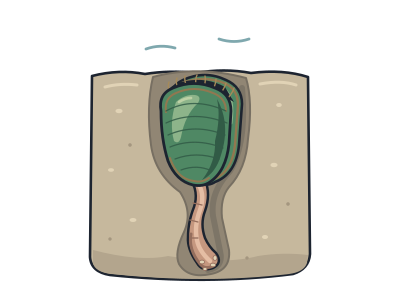
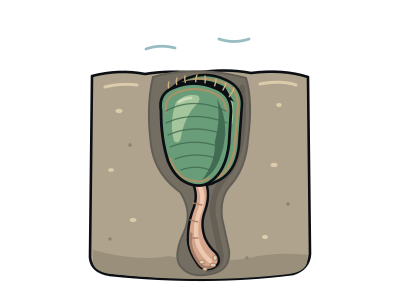
It looks like a clam, but this lamp shell belongs to another group: the brachiopods. They share a wider branch of the animal tree with molluscs and segmented worms. The shell gives away the difference. A clam's two shell halves cover its left and right sides. A lamp shell's cover its top and bottom. Each half has matching left and right sides.
Its wider group includes animals that burrowed into the seabed more than 500 million years ago, long before dinosaurs. An ancient fossil burrow from Labrador preserves evidence of that way of life. This does not mean today's species is that old, or that evolution stopped. Research has found substantial changes in its genetic make-up.
Today, it lives buried upright in coastal sand and mud. Its shell opening sits just below the seabed surface. A long, fleshy stalk points downwards, anchoring the animal and helping it pull itself deeper into its burrow.
Scissor-like shells
Muscles hold the shell halves together without a toothed hinge. The halves can move like scissors to help with burrowing.
Glossy green
Its thin, smooth shell is glossy green, with visible growth lines and sometimes brownish edges.
A lamp, not a light
The name 'lamp shell' comes from other brachiopods whose shells resemble ancient oil lamps. It does not mean they glow.