An extinct species
Kimberella †
Kimberella quadrata
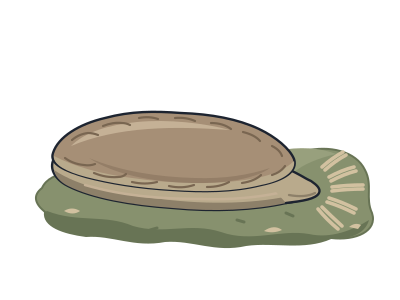
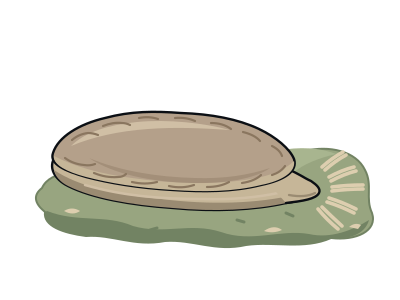
A slug-like animal that probably grazed, leaving tiny rake-like marks.
Lived about 558–555 million years ago.
You and the kimberella meet in the Two-sided animals branch, shown at about 580 million years ago (on 11 November, in a calendar from life's shared ancestor to today).
This slug-like animal probably grazed on carpets of tiny organisms covering the seafloor. It lived about 558 to 555 million years ago. Its body had matching left and right sides. Researchers usually placed it among the two-sided animals, the broad family that includes us. A slug-like shape did not make it a true slug.
Fans of paired scratches offered clues to its meals, rather like repeated strokes of a tiny rake. Body impressions and these marks occurred together in both South Australia and Russia. That repeated association supported the idea that this animal made the scratches while feeding on the living carpets, called microbial mats.
The fossils preserved body outlines, while the scratches recorded activity. Together, they helped researchers reconstruct an animal feeding on the ancient seabed. But an outline was not a complete body: its soft parts and the exact way it scraped its food still needed interpretation.
Marks with their own name
The scratches were named Kimberichnus. Fossil traces of activity were classified separately from fossil bodies.
A patterned border
Body fossils showed a scalloped or ridged band around much of the body, usually inside an outer rim.
An Australian find
One Australian specimen illustrated by the Royal Ontario Museum was about 8 cm long.
Next to it on the tree
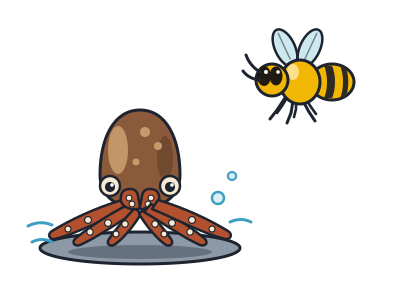
- Mouth-first animalsInsects, snails, worms and octopuses: most animal species alive are on this branch.
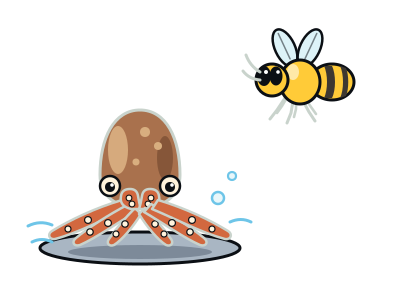
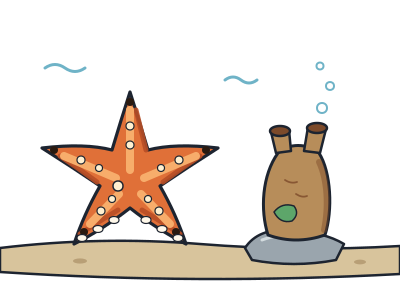
- Starfish, sea squirts and usOur own branch: a starfish is a closer relative of yours than any insect or octopus.
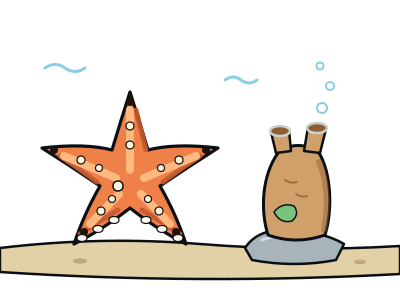
- IkariaA rice-grain-sized burrower that may be the oldest known two-sided animal.
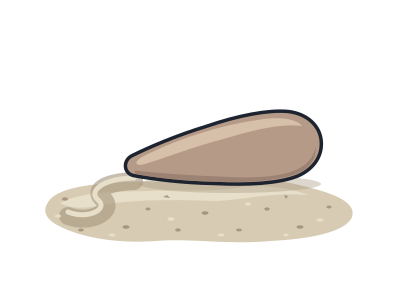
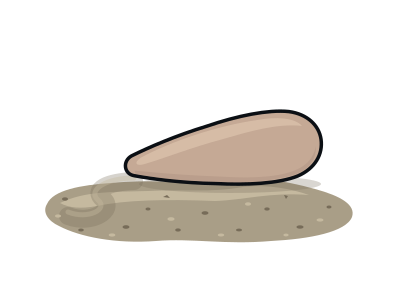
- Xenacoelomorph wormsSimple soft worms with no anus and barely a brain, whose place near the root of two-sided animals is still argued.