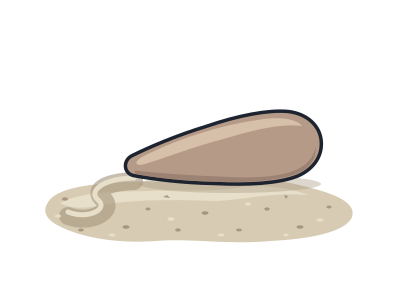
An extinct species
Ikaria †
Ikaria wariootia
Perhaps among the oldest two-sided animals, with the largest fossils about the size of a rice grain.
Lived about 560–555 million years ago.
You and the ikaria meet in the Two-sided animals branch, shown at about 580 million years ago (on 11 November, in a calendar from life's shared ancestor to today).
This possible burrower may have been one of the oldest known two-sided animals. The largest fossils were about the size of a grain of rice. If that identification was right, it was an early relative of worms, insects and us, not a proven direct ancestor. It lived about 560 to 555 million years ago on a shallow seabed in what is now South Australia.
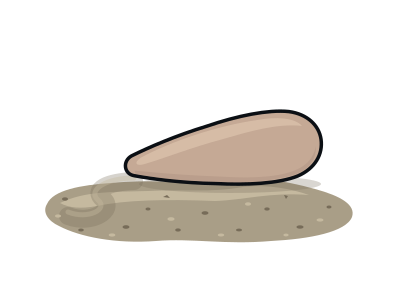
The fossils were tiny impressions on the undersides of sandstone layers. They showed an elongated oval, with one end broader and rounder than the other. Researchers interpreted these as a front and a rear. They used both body shape and burrow evidence to suggest a place among two-sided animals.
Nearby winding burrows matched its size, making it a possible burrow-maker. Researchers suggested it searched thin layers of seabed sand for food. The impressions did not reveal internal organs, so this picture of its life depended on indirect clues.
A name from Country
Its name honoured Adnyamathanha Country: Ikara is the name for Wilpena Pound, while Warioota Creek supplied the second part.
Many tiny impressions
The original study recorded about 110 specimens on one rock surface and about 20 more on loose rocks.
Scanning the clues
Three-dimensional laser scans helped researchers recognise a consistent body shape in the tiny impressions.
Next to it on the tree
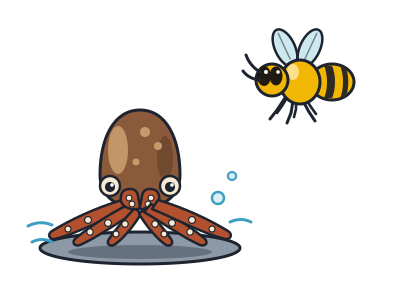
- Mouth-first animalsInsects, snails, worms and octopuses: most animal species alive are on this branch.
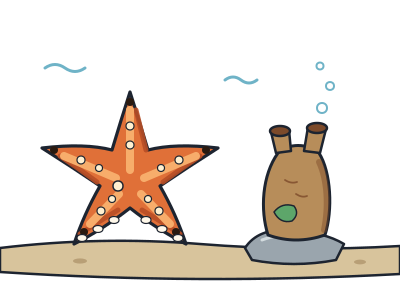
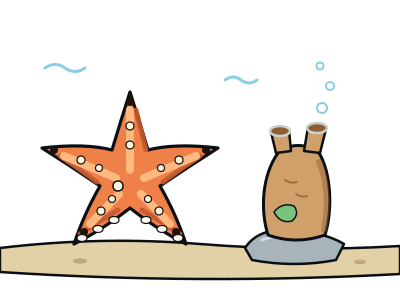
- Starfish, sea squirts and usOur own branch: a starfish is a closer relative of yours than any insect or octopus.
- KimberellaA slug-like Ediacaran grazer that left scratch marks as it fed on microbial mats.
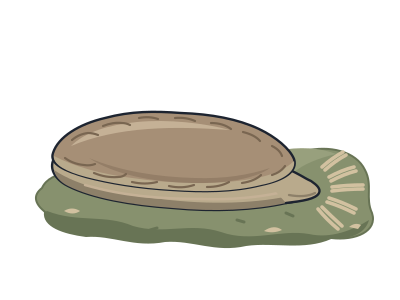
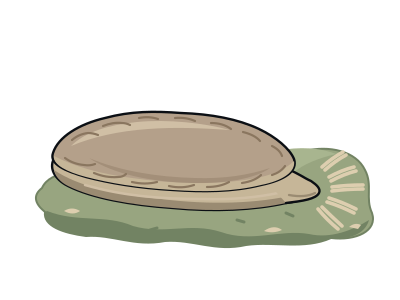
- Xenacoelomorph wormsSimple soft worms with no anus and barely a brain, whose place near the root of two-sided animals is still argued.