A species
Eastern grey squirrel
Sciurus carolinensis
A nut hoarder that accidentally helps plant woodland.
You and the eastern grey squirrel meet in the Primates, rodents and rabbits branch, shown at about 90 million years ago (on 24 December, in a calendar from life's shared ancestor to today).
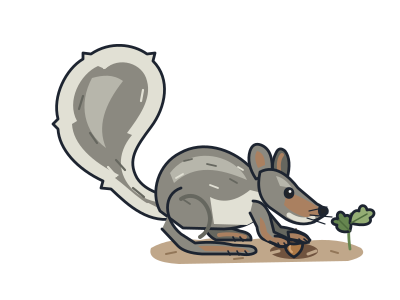
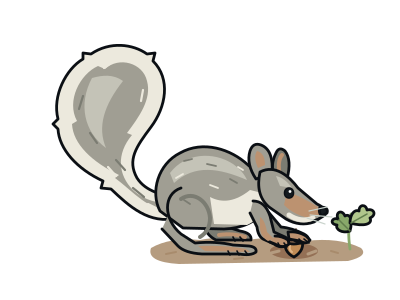
An eastern grey squirrel can bury thousands of nuts in autumn, and some nuts it never retrieves can grow into trees. Its winter food stores help woodland renew itself, without the squirrel deliberately planting anything. Rather than putting its whole supply in one underground store, it buries individual nuts in separate places. An intact seed left in the soil may become a new tree, though not every buried nut will sprout.
Behind that bushy tail is a family connection you might not expect. This squirrel belongs to the rodents, alongside mice, rats, beavers and porcupines. Their different shapes hide a shared tooth pattern: one pair of front cutting teeth in each jaw, with a gap before the grinding teeth. This arrangement helps them gnaw and tackle tough foods.
Finding those scattered meals is not just a matter of sniffing around. Grey squirrels use both memory and smell to locate buried food. Their hidden supplies are more than a collection of lucky discoveries.
More than nuts
Their menu includes seeds, buds, flowers and fungi. They sometimes eat insects and birds’ eggs too.
Nearly bare babies
Newborns are almost hairless apart from their whiskers. Their mother cares for them in the nest until they can live independently.
Empty hiding places
Grey squirrels sometimes dig and cover empty holes when other squirrels are nearby. These false hiding places may help protect their real food stores.
Next to it on the tree
- Eurasian red squirrelA tufty-eared squirrel that has vanished from much of Britain as grey squirrels spread.
- Eastern chipmunkA striped ground squirrel that crams seeds into cheek pouches to fill a winter larder.
- Black-tailed prairie dogA ground squirrel living in huge burrow "towns" with alarm calls that differ by predator.
- GroundhogA burrowing marmot that sleeps through winter and stars in Groundhog Day weather forecasts.
- Southern flying squirrelGlides between trees on furry skin flaps, and its fur glows pink under ultraviolet light.