A species
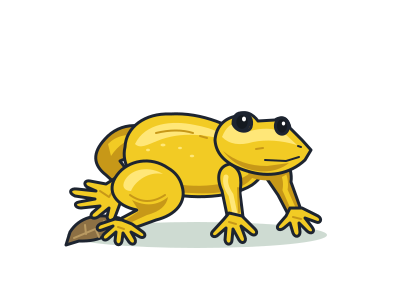
Golden poison frog
Phyllobates terribilis
Bright gold is a warning, not a disguise.
You and the golden poison frog meet in the Four-limbed animals branch, shown at about 350 million years ago (on 1 December, in a calendar from life's shared ancestor to today).
A wild golden poison frog can carry enough skin poison to kill several people. Its bright colour warns predators to leave it alone, rather than helping it hide. It belongs to the poison-dart frog family, within the wider group of frogs and toads. Like many other frogs, it has poison in its skin, but its poison is unusually powerful.
It lives on the ground in moist lowland rainforest in Colombia, often near rivers. Its meals include small insects such as ants, termites and beetles. The substances behind its poison come from its wild diet. Frogs bred in captivity and fed a different diet do not develop the dangerous skin poison found in wild frogs.
Family life starts on land, where females lay their eggs. After the eggs hatch, the male carries the tadpoles on his back to water. There, the young continue growing before becoming little frogs themselves.
Not always golden
Adults can be yellow, orange or mint green.
A trilling call
Males attract females with trilling calls.
A threatened home
The species is listed as Endangered. Habitat loss and pollution threaten its wild populations.