A species
Goblin shark
Mitsukurina owstoni
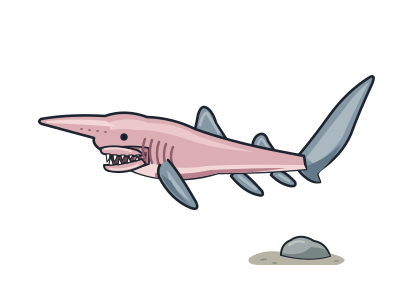
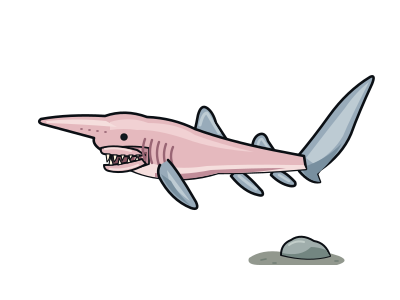
A pink shark with slingshot jaws
You and the goblin shark meet in the Jawed vertebrates branch, shown at about 465 million years ago (on 21 November, in a calendar from life's shared ancestor to today).
The goblin shark is a pink deep-sea shark whose jaws shoot forwards like a slingshot to snatch prey. Strange as it looks, it belongs to the mackerel sharks, the same group as the great white. Other sharks can push their jaws out too. This one takes that shared ability to an extreme.
Both jaws surge forwards beneath its long, flattened snout. They do not stay stretched out: at rest, they sit back beneath the head. Its pinkish-white colour comes from blood vessels showing through its skin.
It lives in deep water around the sloping edges of continents and underwater mountains, often close to the seabed. Recorded adults are roughly the length of a small car. Its slender body, tiny eyes and long snout give this shark a very different outline from the great white.
A split-second strike
In filmed feeding strikes, opening the mouth, throwing the jaws forwards and closing them took about 0.3 seconds.
An impressive reach
Researchers recorded the lower jaw travelling forwards by about 9% of the shark’s total body length.
First described from Japan
Scientists formally described the species in 1898 from Japan.
Next to it on the tree
- Great white sharkA warm-bodied ocean hunter that is far less dangerous to people than its reputation.
- MegalodonThe largest predatory shark ever, about three times a great white's length, with hand-sized teeth.
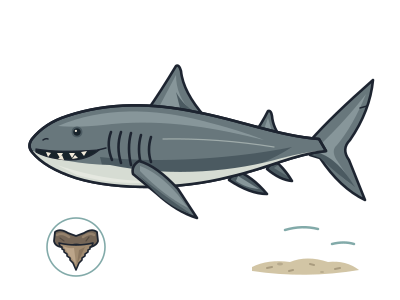
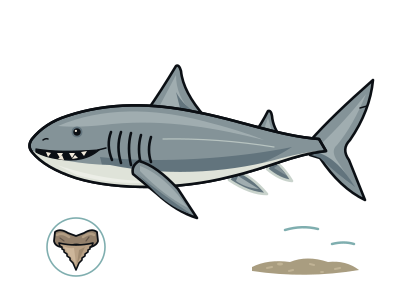
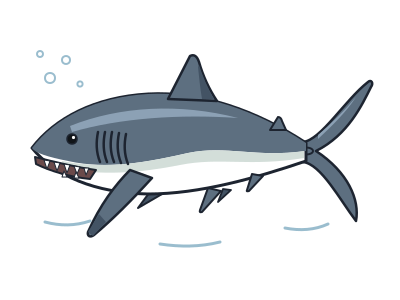
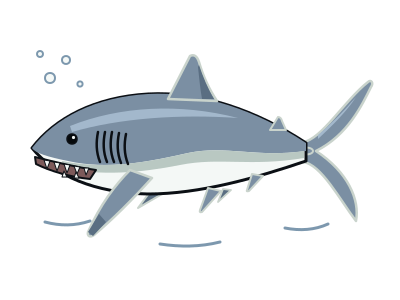
- Shortfin makoThe fastest shark known, with bursts near 70 km/h and leaps several metres clear of the water.
- Common thresher sharkIts tail is as long as its body, and it cracks it like a whip to stun whole shoals of fish.
- Basking sharkThe second-biggest fish alive cruises slowly with its huge mouth wide open, sieving plankton.
- Ginsu sharkA seven-metre Cretaceous shark with knife-edged teeth that hunted in the sea covering North America.