A species
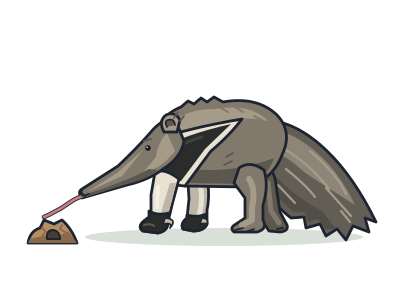
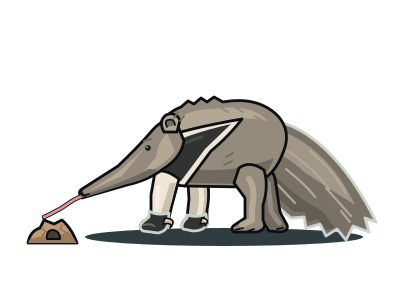
Giant anteater
Myrmecophaga tridactyla
No teeth, but a remarkable tongue.
You and the giant anteater meet in the Placental mammals branch, shown at about 95 million years ago (on 23 December, in a calendar from life's shared ancestor to today).
The giant anteater has no teeth, but its narrow tongue is commonly described as about 60 centimetres long. It can flick in and out up to about 150 times a minute. Despite this unusual feeding equipment, its close relatives include sloths. Anteaters and sloths share one branch of their wider mammal group, while armadillos belong to the other main branch. Unlike anteaters, sloths and armadillos have teeth.
Powerful front legs and curved claws tear open ant and termite nests. Sticky spit coats the tongue, helping it gather insects from inside. Ants and termites make up most of the menu, though other insects are sometimes eaten too. Pangolins and aardvarks have similar feeding equipment, but they are not close relatives: these features evolved independently.
Giant anteaters live on the ground in grasslands, forests and wetlands. Their patchy range stretches from Honduras through parts of South America to northern Argentina. They have disappeared from much of their former range in Central America.
Claws tucked away
Giant anteaters curl their front claws inward and walk on their front knuckles to protect them. Their back feet do not walk this way.
A nose for the menu
They can identify particular kinds of ants or termites by smell before opening a nest.
Numbers are falling
The species is classified as Vulnerable on the IUCN Red List, and its population is decreasing.