A species
Electric eel
Electrophorus electricus
Not an eel, but a knifefish with a powerful shock.
You and the electric eel meet in the Bony fish and their descendants branch, shown at about 430 million years ago (on 24 November, in a calendar from life's shared ancestor to today).
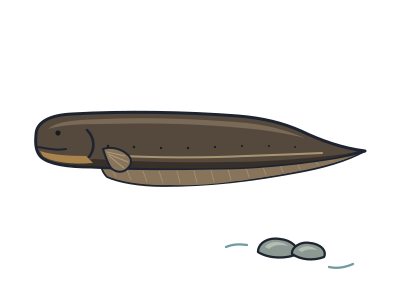
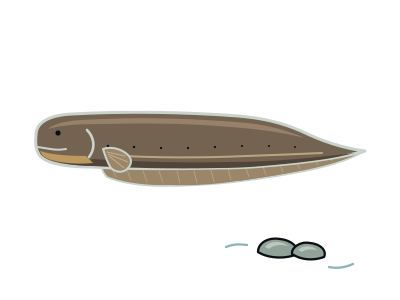
The electric eel is not an eel at all. It is a knifefish, more closely related to carp and catfish than to true eels. That makes the goldfish and catfish beside it on this tree less surprising neighbours. This long, snake-shaped fish stuns prey with electrical shocks of several hundred volts.
Those shocks are not just for hunting. Strong electrical pulses also help it defend itself. Weaker pulses help it find its way and communicate with other electric eels. In a 2019 study, one fish about 76 centimetres long produced a 480-volt shock. That was a measurement from one animal, not a maximum for the species.
This species lives in freshwater streams and rivers of the Guiana Shield in northern South America. Its habitat includes rocky waterways with rapids and waterfalls, rather than the muddy lowland homes often associated with other electric-eel species.
An air-breathing fish
It must visit the surface to breathe air. Folds inside its mouth absorb oxygen.
Mostly electrical equipment
Three electricity-producing organs occupy about four-fifths of its body.
A rippling ribbon
A long fin underneath its body ripples to move it forwards or backwards.
Next to it on the tree
- Carps, minnows and loachesThe biggest freshwater fish order, with toothless mouths and teeth in their throats instead.
- Tetras and piranhasToothy, often colourful fish of Africa and South America, including tetras and piranhas.
- CatfishesWhiskered, scaleless or armoured fish found on every continent but Antarctica.