A species
European eel
Anguilla anguilla
An Atlantic journey with an unseen ending
You and the european eel meet in the Bony fish and their descendants branch, shown at about 430 million years ago (on 24 November, in a calendar from life's shared ancestor to today).
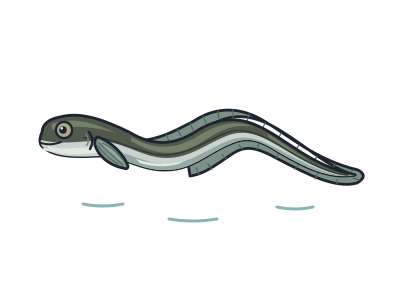
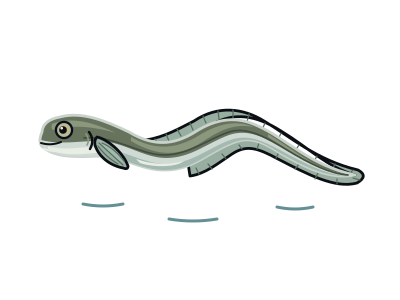
European eels swim thousands of kilometres across the Atlantic to breed in the Sargasso Sea. Yet nobody has ever watched them breed in the wild. This mysterious traveller may look like a snake, but it is a ray-finned fish, part of the same broad group as herring, salmon and cod.
About a century ago, researchers found the smallest young eels in the Sargasso Sea. That was a strong clue to their birthplace. Research published in 2022 provided the first direct tracking evidence of an adult reaching the presumed breeding area. The tracked eels had set off from the Azores, rather than mainland Europe. Reaching the area was not the same as being seen breeding.
The early young are transparent and shaped like leaves, not tiny adult eels. Near European shores, they become transparent, eel-shaped youngsters called glass eels. Some grow up in rivers and lakes, while others stay in river mouths or coastal waters. Growing eels shelter beneath stones, in cracks or buried in mud.
A slippery land crossing
European eels can survive outside water for a time and may crawl through wet grass to reach water.
An adaptable eater
They hunt and scavenge, eating small water animals, fish eggs and other fish.
In serious trouble
The European eel is listed as Critically Endangered on the global IUCN Red List.
Next to it on the tree
- Atlantic tarponA huge silver leaper that gulps air at the surface and can live in water too stale for most fish.
- Giant morayTeams up with groupers to hunt: the moray flushes fish from cracks while the grouper waits outside.
- Pelican eelA deep-sea eel that is mostly mouth, with a whip-thin tail tipped by a glowing light.
- Spotted garden eelColonies sway up out of the sand like a garden of stalks, then all vanish into their burrows.