An extinct species
Diplocaulus †
Diplocaulus magnicornis
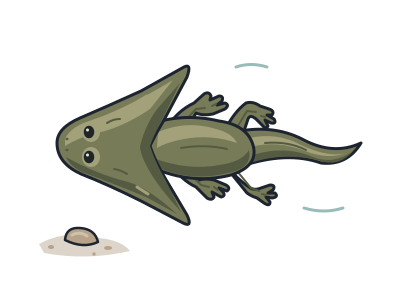
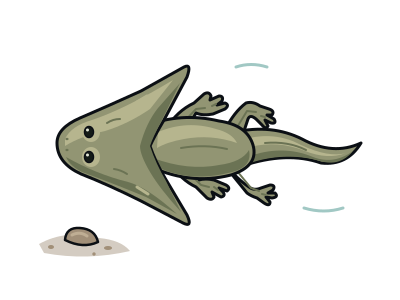
An amphibian relative with a boomerang-shaped head
Lived about 299–274 million years ago.
You and the diplocaulus meet in the Four-limbed animals branch, shown at about 350 million years ago (on 1 December, in a calendar from life's shared ancestor to today).
This amphibian relative had a head shaped like a boomerang, possibly useful as an underwater wing. It belonged among early four-limbed animals, but it was not a true salamander. Its exact relationship to living amphibians and other four-limbed animals remained unsettled.
Fossil skulls showed two long, bony points sweeping outwards and backwards. The boomerang outline was supported by bone, not simply an imagined flap of skin. One proposed use was as a hydrofoil: a surface that produced lift underwater. Models suggested that tilting the head could have helped the animal rise through water. This was an explanation tested with models, not behaviour recorded in a fossil.
Fossils identified as this species came from the early Permian. This part of Earth's history lasted from about 299 to 274 million years ago. That was not a confirmed lifespan for this species. Its bones revealed much more about its shape than about its skin or colour.
Air tests for water movement
Researchers tested reconstructed heads in a wind tunnel to investigate how water could have flowed around them.
Not solid throughout
The bony points of its head contained large internal spaces.
Two fossil regions
Skull material identified as this species came from rocks in both Texas and Oklahoma.
Next to it on the tree
- AmphibiansDouble lives: born in water, living on land, breathing partly through their skin.


- AmniotesThe waterproof egg let animals leave the water for good.
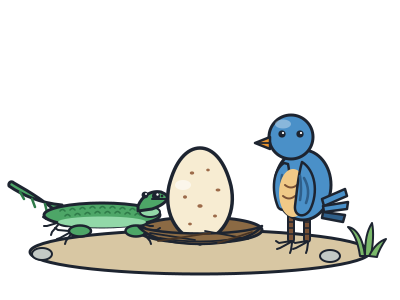
- TemnospondylsBig-headed amphibian relatives that ruled swamps for 200 million years, some as long as crocodiles.
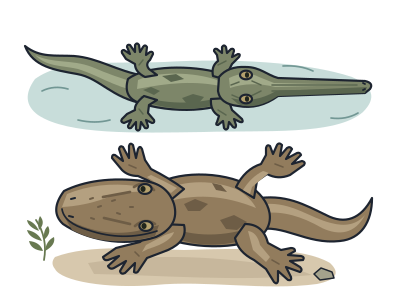
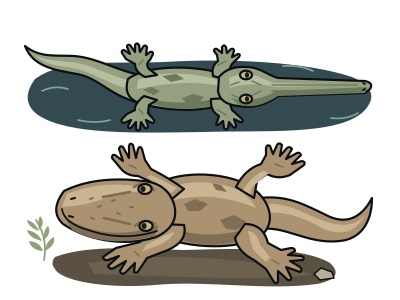
- SeymouriaA sturdy Permian animal halfway between amphibians and reptiles in its build.