A species
Sunda colugo
Galeopterus variegatus
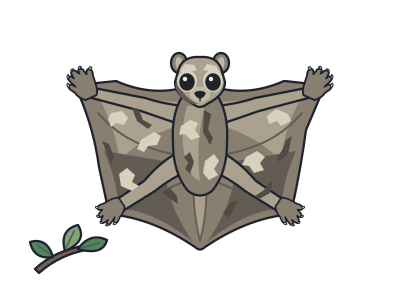
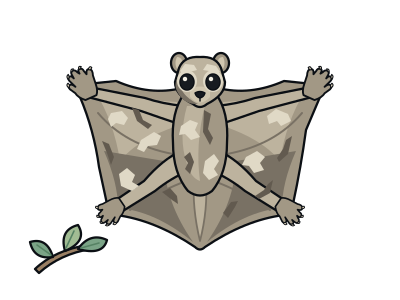
Not a flying lemur, but a gliding relative of primates.
You and the sunda colugo meet in the Primates, rodents and rabbits branch, shown at about 90 million years ago (on 24 December, in a calendar from life's shared ancestor to today).
Compare with something elseDespite its nickname ‘flying lemur’, the Sunda colugo is neither a lemur nor able to fly. It belongs to the colugos, the closest living relatives of primates outside the primate group. That family connection applies to colugos as a whole, not just this species. Other primates are still more closely related to us.
Instead of flapping wings, it spreads a sheet of skin and glides between trees. It can cover about 100 metres, roughly the length of a football pitch. The skin connects its neck, limbs, fingers, toes and tail. Unlike flying squirrels, colugos even have gliding skin between their fingers, helping them steer.
Its fur can be grey or reddish-brown, with white blotches and dark streaks. Bark-like markings help it blend into tree trunks. It mainly eats plant material, including leaves, young shoots and flower buds. Its Southeast Asian home includes Malaysia, Singapore, Sumatra, Java and Borneo.
Tiny tooth-combs
Some lower front teeth look like tiny combs, with up to about 20 prongs on each tooth.
A wrap for a baby
Mothers carry their young and can wrap them in their gliding skin.
A hopping climb
When climbing, it reaches forward with both front limbs, then brings up both hind limbs in a hopping movement.
Next to it on the tree
- PrimatesGrasping hands, forward-facing eyes and big brains: lemurs, monkeys and apes.
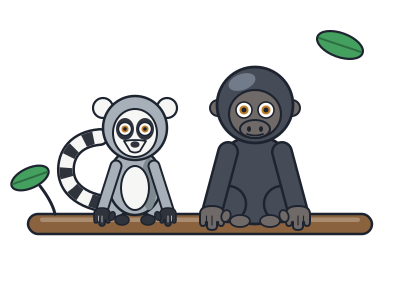
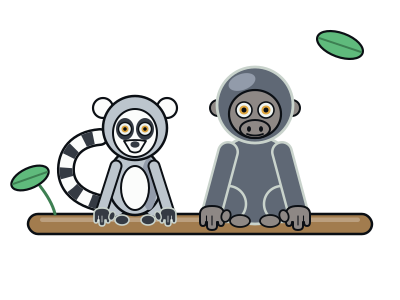
- Rodents and rabbitsRabbits are not rodents, but they are the rodents' closest relatives.
- Northern treeshrewNot a true shrew at all: a squirrel-like animal that is one of the closest relatives of primates.
- PlesiadapisA squirrel-like tree dweller with rodent-style front teeth from near the root of the primate line.