A species
Atlantic cod
Gadus morhua
The fish that fed empires—and a lesson in overfishing
You and the atlantic cod meet in the Bony fish and their descendants branch, shown at about 430 million years ago (on 24 November, in a calendar from life's shared ancestor to today).
Atlantic cod helped feed empires because salted, dried fish could last for months before refrigeration. European fleets fished off Newfoundland centuries ago, and Britain led the region’s cod trade by the early 1700s. That trade also supplied food to enslaved people on Caribbean sugar plantations.
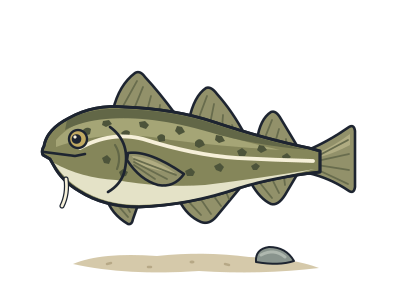
Despite its chin whisker, cod is not a catfish. It belongs to the cod-and-haddock family. Herring, salmon and eels are fellow ray-finned relatives, rather than members of that same family. Look for three separate fins along its back and a curved, pale line down each side. It lives on both sides of the cold North Atlantic.
But even a once-abundant fish can be pushed too far. Overfishing was the main cause of the Northern cod population’s steep decline, leading Canada to stop commercial fishing for it in 1992. This was a regional collapse, not the species’ extinction. Canada reopened that commercial fishery in 2024, but different cod populations have different recovery histories.
Changing colours
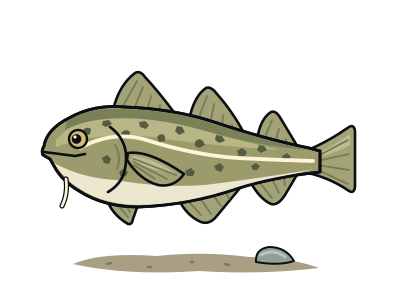
An individual Atlantic cod can change colour.
A long life
Atlantic cod can live for more than 20 years.
Drifting beginnings
Cod eggs float. The tiny young initially drift with ocean currents before settling towards the seabed.