An extinct species
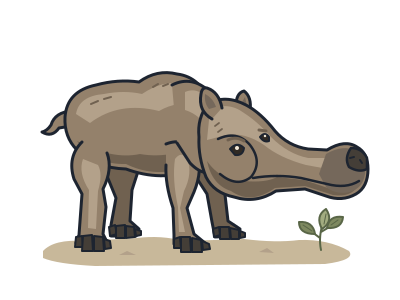
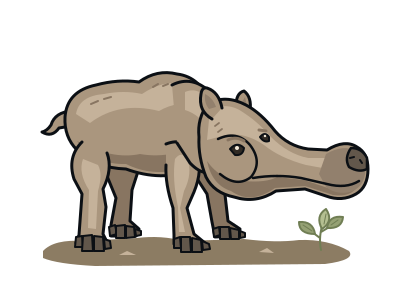
Andrewsarchus †
Andrewsarchus mongoliensis
One huge skull, a famous claim and an unexpected family
Known from about 45 million years ago.
You and the andrewsarchus meet in the Placental mammals branch, shown at about 95 million years ago (on 23 December, in a calendar from life's shared ancestor to today).
Known from one huge skull, this animal was once called the largest meat-eating land mammal. Yet its family connection was more surprising than that title: researchers placed it among the even-toed mammals, alongside pigs, camels, hippos and whales—not among dogs or cats. Its known skull was about 45 million years old.
The fossil preserved an upper skull and teeth, not a complete skeleton. That difference mattered. Researchers could study its head directly, but they had to estimate the rest of its body by comparing it with other animals. A picture of the whole creature was therefore a reconstruction, not a complete fossil brought to life.
Even its meals sparked disagreement. Some researchers argued for a meat-eater; others compared it with animals that ate both plants and animals. The skull made it famous, but did not settle how it lived.
The discoverer
Kan Chuen Pao, a fossil-research assistant, discovered the skull in 1923.
Named for someone else
Its name honoured expedition leader Roy Chapman Andrews, rather than its discoverer.
The discovery site
The skull was found at Irdin Manha in Inner Mongolia, China.
Next to it on the tree
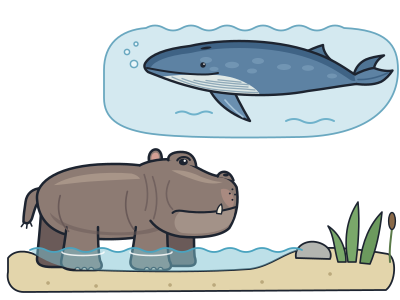
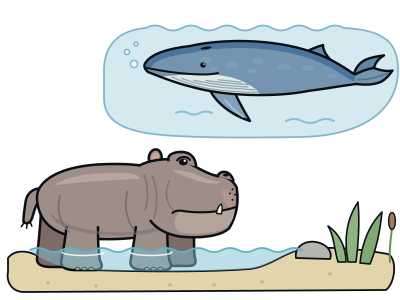
- Hippos and whalesThe hippo is the whale's closest living relative.
- RuminantsCows, deer and giraffes chew the cud with a four-part stomach.
- Camels and llamasCamels began in North America; one branch went to Asia and Africa, the other to South America.
- Pigs and peccariesSnouts with a tough disc for rooting; peccaries of the Americas split from Old World pigs long ago.