A species
Alligator snapping turtle
Macrochelys temminckii
A turtle that fishes with a built-in lure
You and the alligator snapping turtle meet in the Amniotes branch, shown at about 320 million years ago (on 4 December, in a calendar from life's shared ancestor to today).
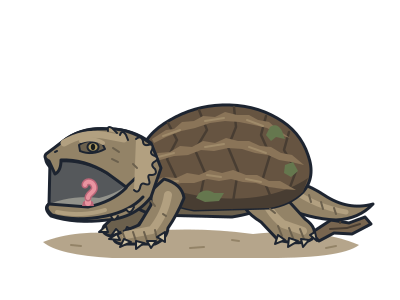
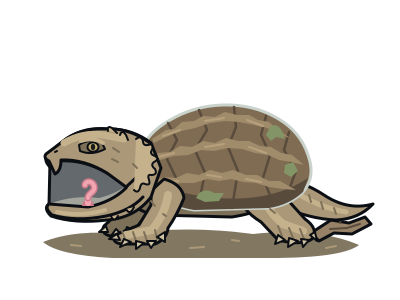
The alligator snapping turtle lies still underwater with its mouth open, gently wiggling a pink, worm-like growth on its tongue. Fish that approach the fake worm can become its meal. The lure is part of the turtle, not a separate worm. Despite its name, this is a snapping turtle—not an alligator—and belongs to the same wider group as sea turtles and land tortoises.
It lives in freshwater rivers, lakes and swamps across parts of the central and southern United States. Sunken trees, stumps and tangled roots provide cover. Algae growing on its dark-brown shell help it blend into muddy river bottoms. Young turtles use shallower, sheltered water.
Waiting for fish is only one way it finds food. Most active at night, it also hunts and eats dead animals it finds. Its varied meals include crayfish, shellfish, smaller turtles and some plant material. It breathes air, so it must return to the surface.
No teeth
Like other turtles and tortoises, it bites with the hard edges of its jaws rather than teeth.
Eggs on land
Females leave the water to dig nests and bury their eggs.
Trouble from fishing gear
Accidental capture in fishing gear, habitat damage and past overharvesting threaten populations.