An extinct species
Eomaia †
Eomaia scansoria
A mouse-sized relative of our mammal family
Lived about 125–124 million years ago.
You and the eomaia meet in the Live-bearing mammals branch, shown at about 160 million years ago (on 18 December, in a calendar from life's shared ancestor to today).
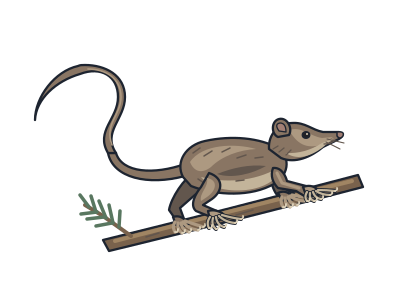
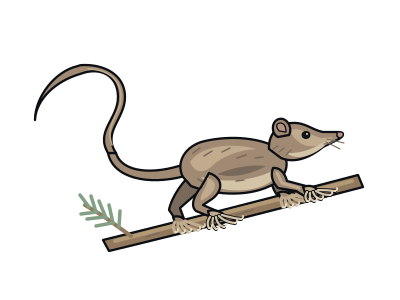
This mouse-sized mammal was an early relative of placental mammals, the group that includes humans. It lived about 125 to 124 million years ago in what is now north-eastern China. Its small size did not make it a mouse, and its place near our mammal family did not establish it as our direct ancestor.
Its feet and claws suggested that it could climb and walk along branches. Unusually long bones in its fourth and fifth toes were among the clues to that climbing ability. The wider landscape included forests and lakes, with insects, other mammals and feathered dinosaurs.
The fossil preserved more than bones: hairs suggested longer outer hairs over a denser undercoat. Its skeleton lay across two matching slabs of rock. These remains offered evidence of its body, but climbing was an interpretation of its anatomy, not behaviour caught in the fossil.
An extra-long tail
Its tail backbone was about twice as long as the rest of its backbone.
Tiny kneecaps
Both hind legs had preserved bony kneecaps.
A hopeful name
Its name combined ‘dawn mother’ with a reference to climbing.