An exploration group
Australopithecus
Hominins
Five extinct human relatives, not five proven steps towards us.
This diagram groups fossils for exploration. An edge is not proof of direct ancestry; fossil dates are known occurrence ranges, not exact origin, extinction or divergence dates. Reconstructions are interpretations.
Return to the tree of life →These extinct relatives belonged to our human family, yet some combined familiar upright walking with features useful for climbing. This page brings together five selected species for exploration. It does not show a proven chain of ancestors leading towards us. A connecting line in the diagram is a browsing link, not proof that one species gave rise to another.
They lived in Africa, with known fossils spanning about 4.3 to 2 million years ago. Those dates describe the remains found so far, not the exact beginning or end of each species. The different species did not all have identical bodies or ways of moving.
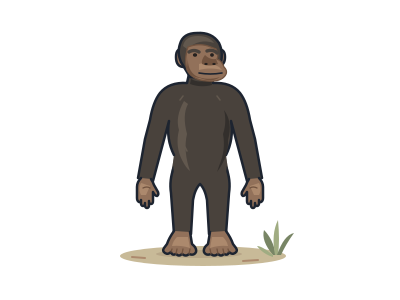
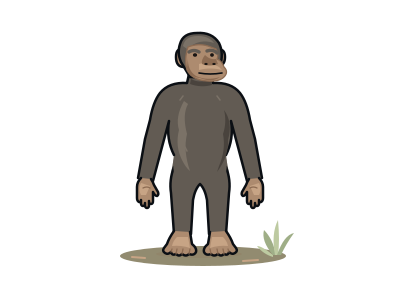
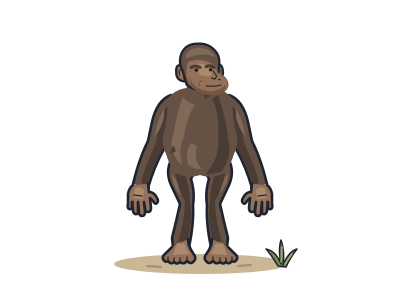
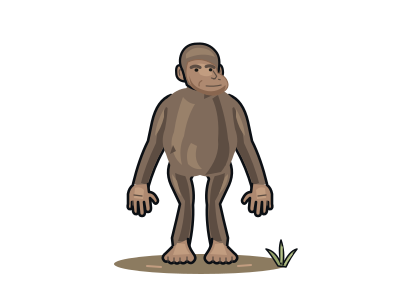
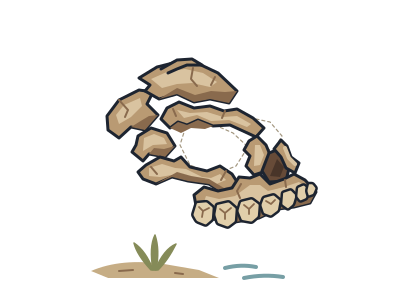
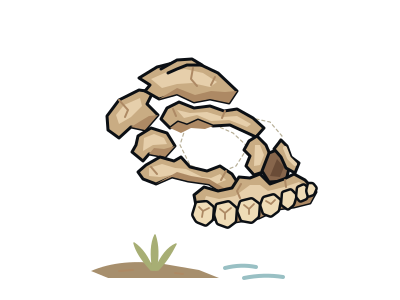
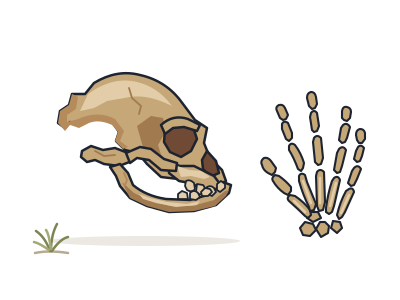
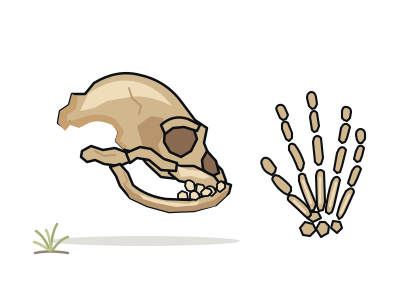
Bones provided clues to that mixture of abilities. In the earliest species shown here, shin and ankle features supported two-legged walking; forearm and wrist features suggested climbing. Other species preserved different parts of the body. Reconstructed bodies and faces filled gaps in the evidence. They were interpretations, not preserved portraits of these members of our family.
A smaller brain
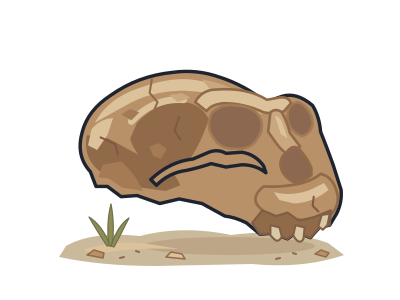
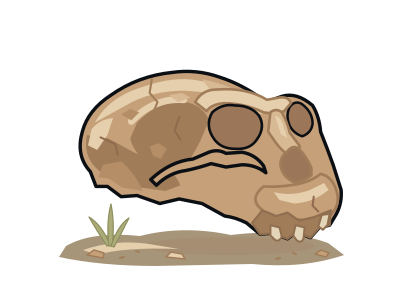
Members of Lucy’s species had brains about one-third the size of a modern human brain.
Clues from meals
Tooth evidence suggested that Lucy’s species ate mainly plants. Fine wear pointed to soft foods such as fruit.
A distinctive face
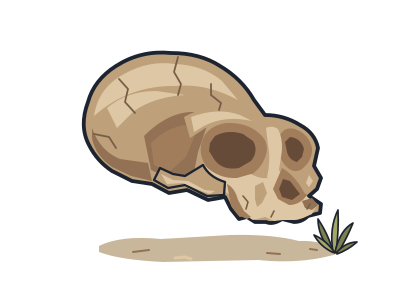
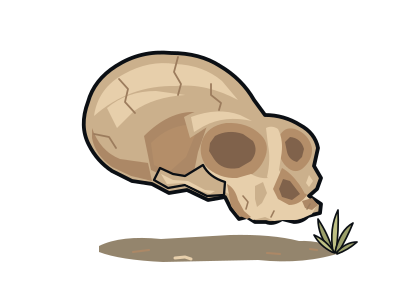
Lucy’s species had a projecting lower face and a flat nose.
Explore this group
Study attribution
Smithsonian Human Origins: species and human variation. Independently written factual summaries and links only; no museum prose, drawings, photos, 3D models or family-tree graphic imported.
Selected facts/group membership adapted; simplified layout and illustrations by Lifetree.