An exploration group
Scent hound clade
Parker et al. 2017
Different shapes, grouped by genetic similarities
Branches show genetic similarity, not direct ancestors or dated splits. Crossbreeding connects different branches.
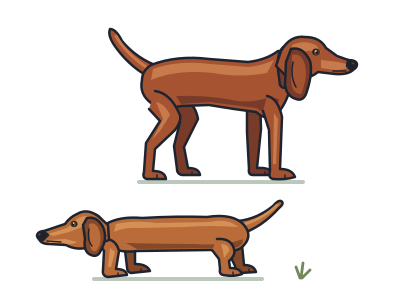
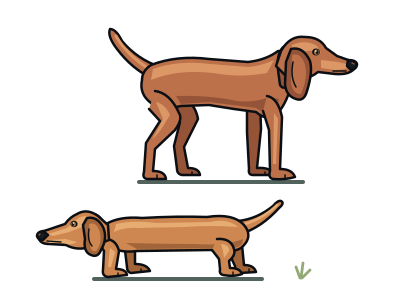
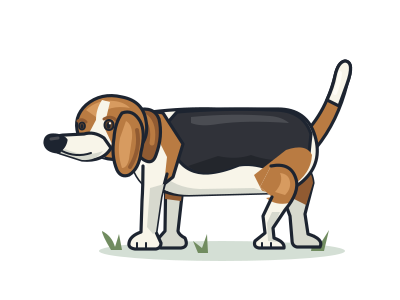
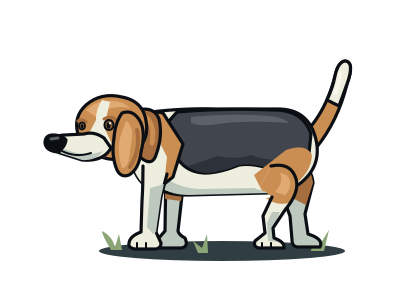
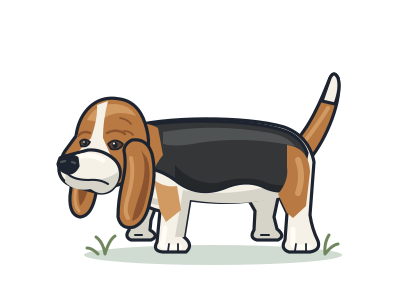
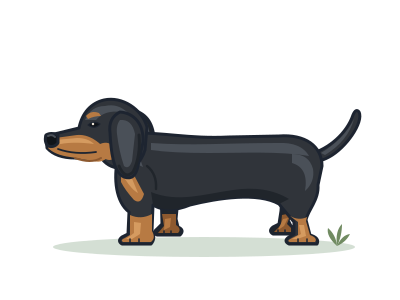
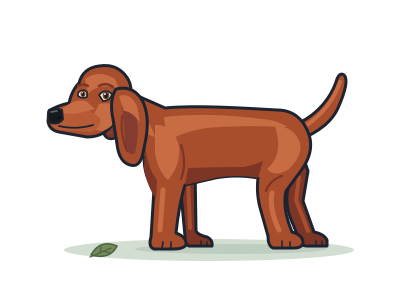
Return to the tree of life →A long-bodied Dachshund and a taller Redbone Coonhound may look an unlikely pair, yet this study grouped them with Beagles and Basset Hounds using genetic information. These four breeds are selected members of its Scent hound group, not a complete list of scent-hunting dogs.
Their different shapes come with different hunting jobs. Beagles were developed to follow animal scent, especially the scent of hares. Dachshunds used their keen noses to follow animals underground. Redbone Coonhounds were developed to track raccoons to trees, then alert their handlers.
Read this diagram as a grouping based on similarities, not a pedigree. A breed drawn beside another is not being shown as its ancestor. That does not rule out documented breed development or historical crosses: mixing between breeds helped shape modern dogs. A branching diagram alone cannot tell that whole story.
A wide-ranging study
The researchers compared genetic information from about 1,350 dogs representing 161 breeds.
Three kinds of coat
Dachshunds come in smooth, longhaired and wirehaired varieties.
Not just dry ground
Redbone Coonhounds are also strong water dogs.
Explore this group
Study attribution
Parker et al. (2017), Cell Reports 19:697–708 · CC-BY-4.0. Selected clade membership and nested Figure 1 relationships restated as a new, simplified diagram. No photographs, branch lengths or bootstrap values copied.
Selected facts/group membership adapted; simplified layout and illustrations by Lifetree.