An exploration group
Early hominins
Hominins
Our early human family was not a simple ladder.
This diagram groups fossils for exploration. An edge is not proof of direct ancestry; fossil dates are known occurrence ranges, not exact origin, extinction or divergence dates. Reconstructions are interpretations.
Return to the tree of life →The early hominins gathered here are usually placed in our wider human family. They were not one species, and this browsing group is not a proven branch of the family tree. Lines in the diagram help you explore fossils; they do not establish that one species was another’s direct ancestor.
Using Smithsonian summaries, the fossils included here span about 7 million to 4.4 million years ago, with gaps. Those dates describe known fossil finds, not exact beginnings or endings. The remains were found in Chad, Kenya and Ethiopia, but these places do not reveal everywhere the animals once lived.
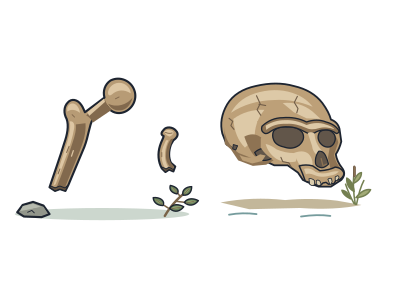
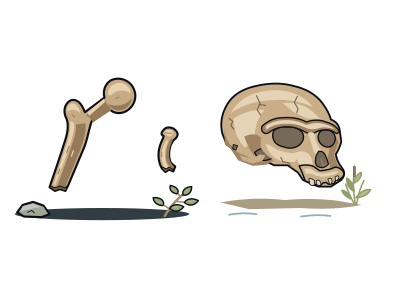
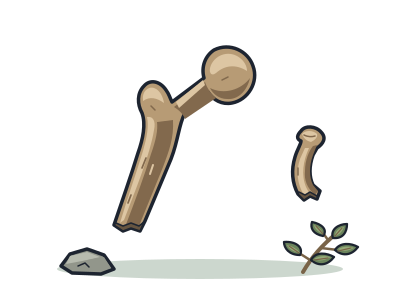
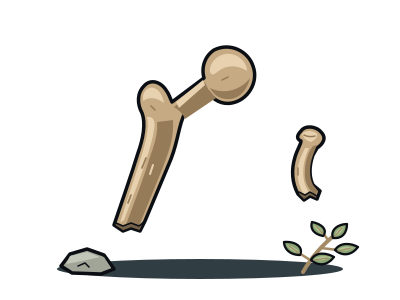
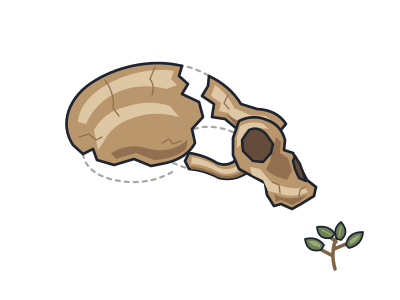
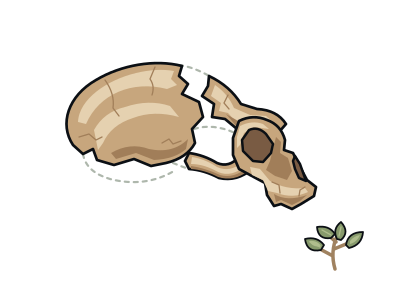
Their bodies held clues to different ways of moving. Orrorin had long, curved finger bones useful for climbing. Its thigh bones suggest that it could also walk on two legs, although how often remains uncertain. Walking upright did not necessarily mean moving exactly like us or leaving the trees behind. Fossils reveal parts of this story; lifelike reconstructions add interpretation.
A small fossil sample
The Smithsonian describes 13 Orrorin fossils from at least five individuals.
Tough tooth coverings
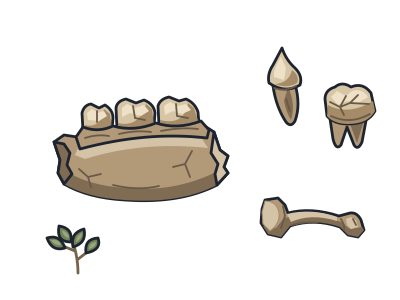
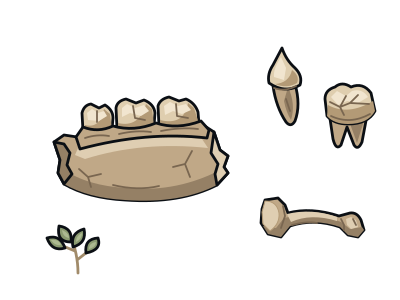
Orrorin had small teeth with thick enamel—the hard outer covering also found on our teeth.
Similar canine sizes
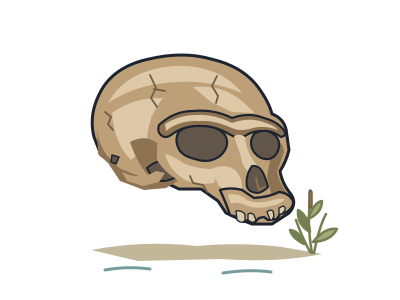
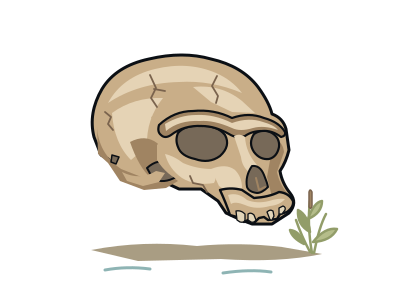
In Ardi’s species, canine teeth showed little size difference between males and females. This alone does not reveal their social behaviour.
Explore this group
Study attribution
Smithsonian Human Origins: species and human variation. Independently written factual summaries and links only; no museum prose, drawings, photos, 3D models or family-tree graphic imported.
Selected facts/group membership adapted; simplified layout and illustrations by Lifetree.