An exploration group
Pointer & setter clade
Selected Parker et al. 2017 branch
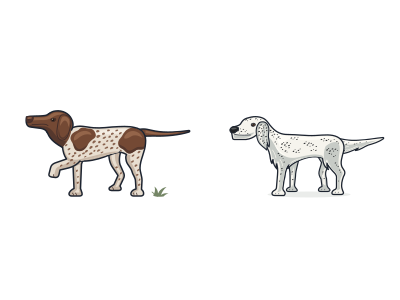
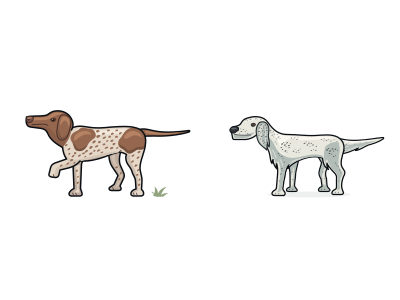
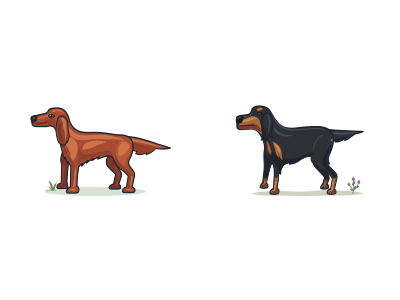
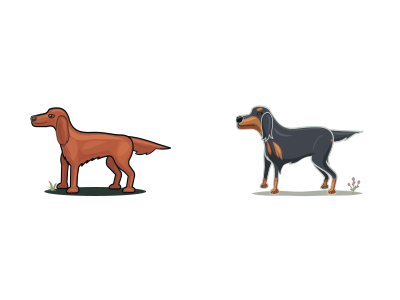
A pointer, three setters and two unexpected neighbours.
Branches show genetic similarity, not direct ancestors or dated splits. Crossbreeding connects different branches.
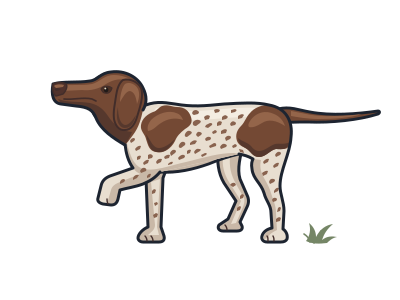
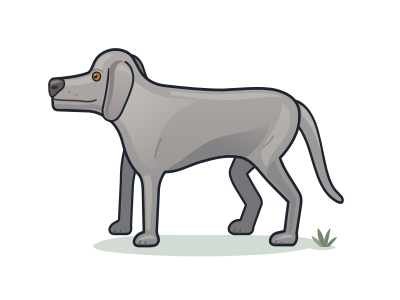
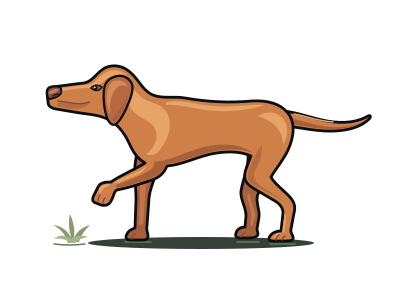
Return to the tree of life →The Weimaraner and Vizsla don’t have ‘pointer’ or ‘setter’ in their names, but the study put them on the same branch as the German Shorthaired Pointer and the Irish, English and Gordon Setters. This exhibit shows six breeds from that branch. The researchers grouped them by DNA similarities, not by a kennel club’s sporting categories.
Pointing and setting are part of these dogs’ working history. The researchers drew a distinction between older breeding for jobs like these and later breeding choices that shaped modern breeds. Those choices sometimes included crossing dogs from different breeds.
The branch shows which breeds the study grouped together. It doesn’t tell us whether one of these breeds descended from a neighbour on the diagram or whether all six came from one named breed.
German pointing dogs
The German Shorthaired Pointer took shape in the 1800s from older pointing dogs. Its studbook began in 1897.
Hunting around Weimar
The Weimaraner standard describes dogs at the Weimar court in the early 1800s, followed by breeding among local hunters and gamekeepers.
Organising the Vizsla
The Hungarian breed club dates organised breeding of the modern short-haired Vizsla to 1920. This is a breeding-history milestone, not a genetic split.
Explore this group

Study attribution
Parker et al. (2017), Cell Reports 19:697–708 · CC-BY-4.0. Selected clade membership and nested Figure 1 relationships restated as a new, simplified diagram. No photographs, branch lengths or bootstrap values copied.
Selected facts/group membership adapted; simplified layout and illustrations by Lifetree.