An exploration group
Nordic spitz clade
Selected Parker et al. 2017 branch
Two herding breeds with different builds
Branches show genetic similarity, not direct ancestors or dated splits. Crossbreeding connects different branches.
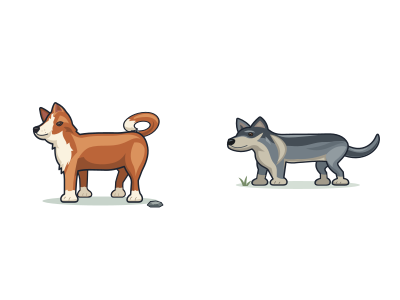
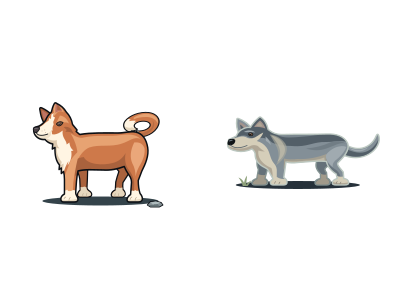
Return to the tree of life →The Icelandic Sheepdog is a herding dog from Iceland. The Swedish Vallhund has short legs and was bred to herd cattle. You’ll see those two breeds here, but they’re only part of the study group. The full group also included the Keeshond, Norwegian Elkhound and Tibetan Terrier.
The branches group breeds by similarities in the DNA of the dogs in the study. Nordic Spitz is the name of one of those groups, not the name of a breed. The diagram doesn’t show one breed as the ancestor of another or tell you when breeds split.
Crossbreeding can connect breeds on different branches. To look for signs of that mixing, the researchers made a separate comparison of stretches of DNA the dogs shared.
Icelandic recovery
In 1967, Sigríður Pétursdóttir began a breeding programme at Ólafsvellir with help from Páll A. Pálsson. Later imports from Mark Watson’s programme widened the small breeding stock.
Swedish recovery
In the early 1940s, Björn von Rosen and K. G. Zetterstén sought surviving local farm dogs in western Sweden. Zetterstén used them to rebuild the Vallhund.
Two tail shapes
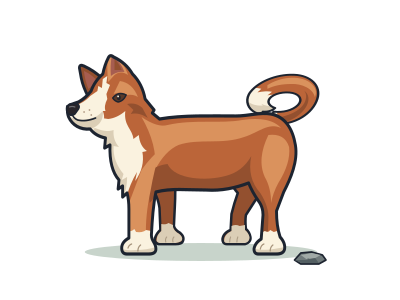
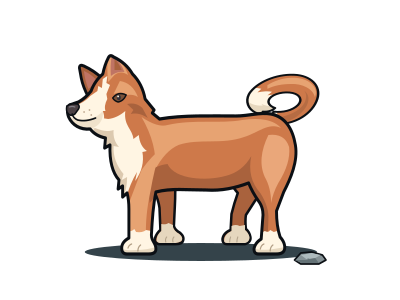
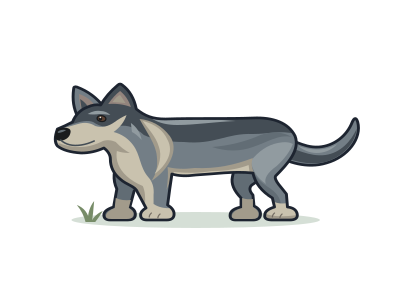
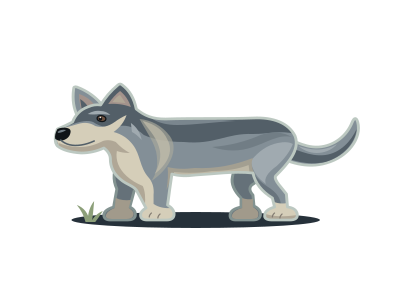
The Icelandic Sheepdog carries a bushy curl over its back. Vallhunds may be born with a full-length or naturally short tail.
Explore this group
Study attribution
Parker et al. (2017), Cell Reports 19:697–708 · CC-BY-4.0. Selected clade membership and nested Figure 1 relationships restated as a new, simplified diagram. No photographs, branch lengths or bootstrap values copied.
Selected facts/group membership adapted; simplified layout and illustrations by Lifetree.