An exploration group
New World clade
Parker et al. 2017
Different looks, a surprising DNA connection.
Branches show genetic similarity, not direct ancestors or dated splits. Crossbreeding connects different branches.
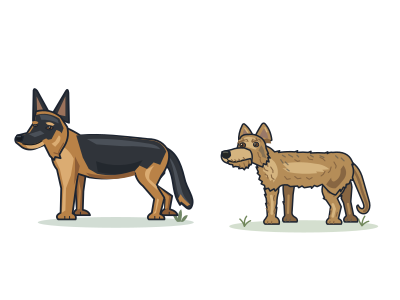
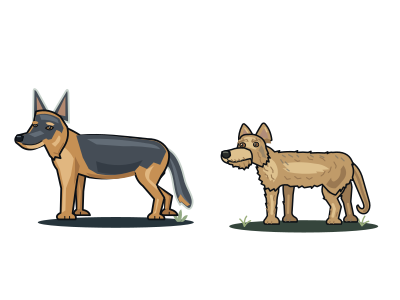
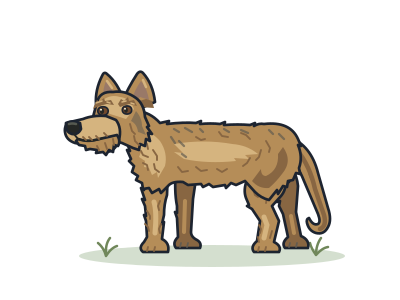
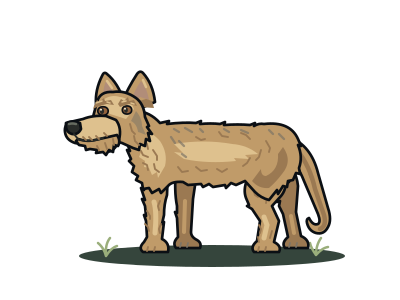
Return to the tree of life →This DNA-based study-group brings together two different-looking dogs: the shaggy Berger Picard and the German Shepherd Dog. They are selected members of the study’s larger New World group, not its complete line-up. Despite that name, these two breeds have histories rooted in France and Germany.
Researchers compared DNA from about 1,350 dogs across 161 breeds. Their broader New World grouping also connects European herding dogs with Mexican and Peruvian hairless dogs. The connection comes from DNA, rather than simply matching coats or body shapes.
Read this diagram as a similarity grouping, not a pedigree showing parents and offspring. Neighbouring breeds are not shown as ancestors and descendants. The browsing groups above them are not direct ancestors either. Neither split dates nor measured branch lengths are implied. Breeds have been crossed, so one branching picture cannot tell their whole history. That does not erase documented breed development from earlier dogs.
Herding came first
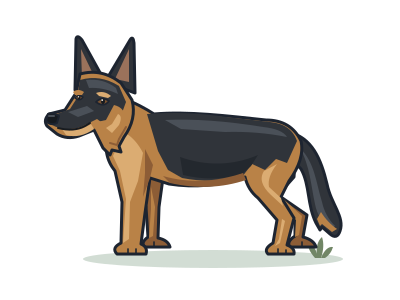
The German Shepherd Dog was developed from different regional German sheepdogs, rather than starting as a police dog.
One breed, two names
Alsatian is another name historically used for the German Shepherd Dog, not a separate breed.
A shaggy film star
Berger Picards played the apparently mixed-breed dog in Because of Winn-Dixie.
Explore this group
Study attribution
Parker et al. (2017), Cell Reports 19:697–708 · CC-BY-4.0. Selected clade membership and nested Figure 1 relationships restated as a new, simplified diagram. No photographs, branch lengths or bootstrap values copied.
Selected facts/group membership adapted; simplified layout and illustrations by Lifetree.