An exploration group
European sighthound relatives
Selected Parker et al. 2017 branch
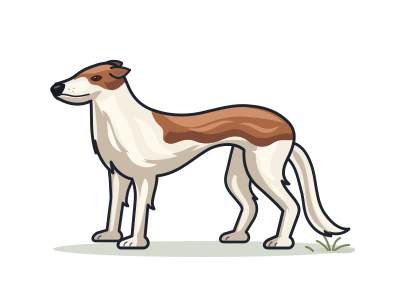
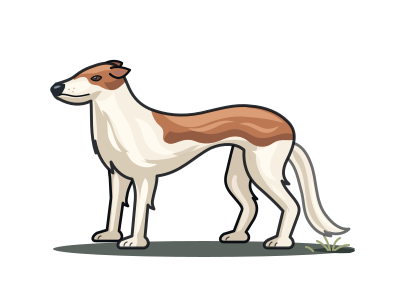
A greyhound shape turns up on more than one branch
Branches show genetic similarity, not direct ancestors or dated splits. Crossbreeding connects different branches.
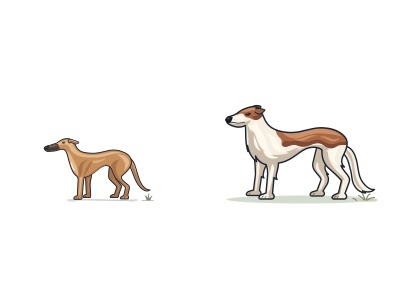
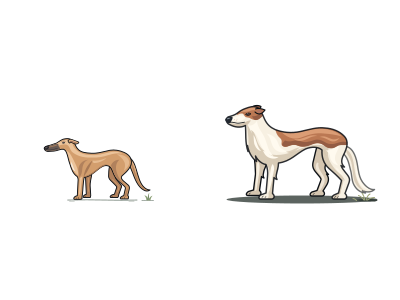
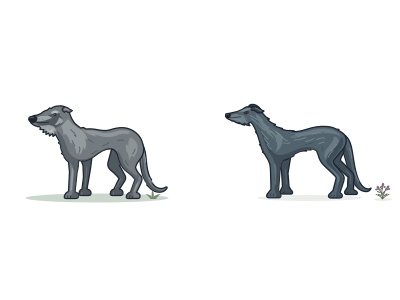
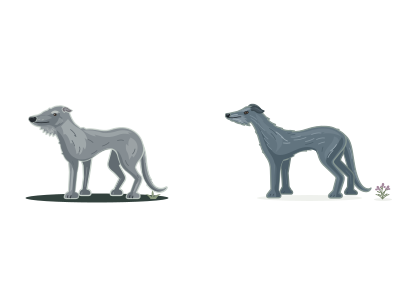
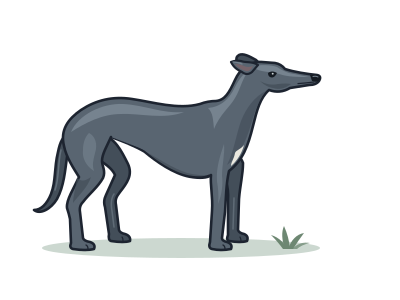
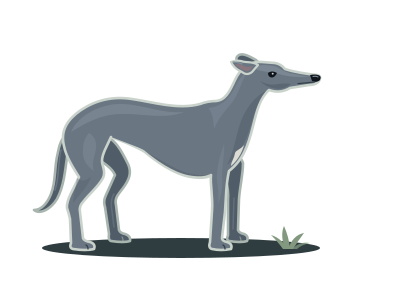
Return to the tree of life →In this study group, the Greyhound sits next to the Whippet, and the Irish Wolfhound sits next to the Scottish Deerhound. The Italian Greyhound and Borzoi round out the group. Some dogs on the separate Mediterranean branch also have a greyhound-like outline, so shape alone can’t tell you which branch a dog belongs on.
These six breeds are part of a larger branch the researchers called UK Rural. That’s the study’s label, not a claim that every breed there came from Britain. The diagram groups breeds by how similar their DNA is. It doesn’t show one breed descending from its neighbour or tell us when breeds split. Dates of breed restoration or official recognition don’t tell us that either.
The researchers looked for signs of crossbreeding between branches in a separate DNA analysis. Breed histories also record crosses that the diagram doesn’t show. The Irish Wolfhound Club of Canada describes how breeders used crosses with Scottish Deerhounds and Borzoi in an effort to restore the Irish Wolfhound in the 1800s.
From rabbits to rag races
In northern England, small greyhound-like dogs chased rabbits and later raced after a rag.
How the Whippet became distinct
The modern Whippet took shape as dog shows and written family records became established in the 1800s.
Different jobs on one branch
In both UK Rural and Mediterranean, breeds on the same branch can look different and have been bred for different jobs.
Explore this group
Study attribution
Parker et al. (2017), Cell Reports 19:697–708 · CC-BY-4.0. Selected clade membership and nested Figure 1 relationships restated as a new, simplified diagram. No photographs, branch lengths or bootstrap values copied.
Selected facts/group membership adapted; simplified layout and illustrations by Lifetree.