An exploration group
Greyhound & Whippet
Selected Parker et al. 2017 branch
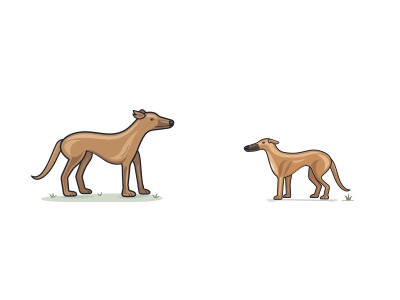
Two sprinting breeds, side by side
Branches show genetic similarity, not direct ancestors or dated splits. Crossbreeding connects different branches.
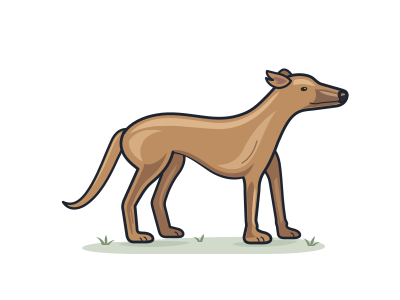
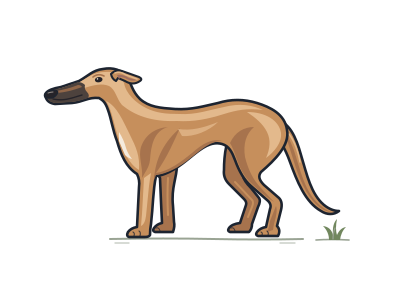
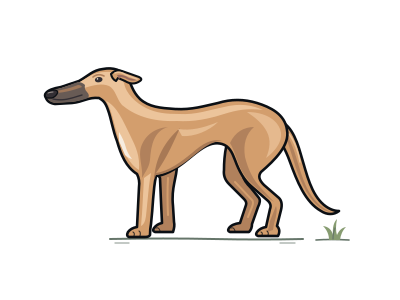
Return to the tree of life →The Greyhound and the Whippet are both streamlined for short, fast runs. Looks alone don’t explain their place here: this study group picks out the two breeds that the researchers placed together within a larger branch.
Small dogs that looked like Greyhounds existed before modern breeds had clear boundaries. In northern England, people used small dogs like these to hunt rabbits. Later, the dogs chased a rag in races. The Whippet became recognised as a distinct breed in the nineteenth century, as dog shows and written breeding records became established.
The diagram doesn’t show one breed descending from the other or give a date for a split between them. Breeds on different branches can still share a history of crossbreeding.
About 160 breeds
The study included about 1,350 dogs from about 160 breeds.
Sprinters on another branch
The study’s Mediterranean branch also includes dogs with a sprinter’s build, alongside very differently shaped dogs bred for other work.
What paintings can’t tell us
Some old paintings depict dogs that look like small Greyhounds. That resemblance can’t tell us whether those dogs were ancestors of today’s Whippets.
Explore this group
Study attribution
Parker et al. (2017), Cell Reports 19:697–708 · CC-BY-4.0. Selected clade membership and nested Figure 1 relationships restated as a new, simplified diagram. No photographs, branch lengths or bootstrap values copied.
Selected facts/group membership adapted; simplified layout and illustrations by Lifetree.