A domestic breed
Whippet
Canis lupus familiaris
The Greyhound’s neighbour in a DNA study.
Branches show genetic similarity, not direct ancestors or dated splits. Crossbreeding connects different branches.
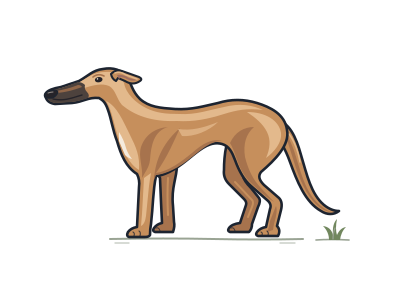
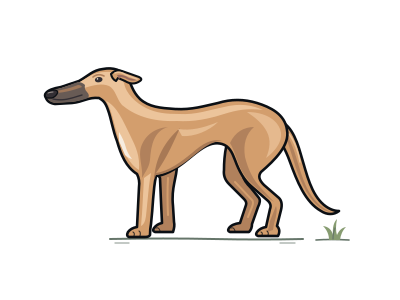
Return to the tree of life →The Whippet resembles a smaller Greyhound, but the two are distinct breeds. Both are sighthounds: dogs bred to spot and chase moving prey. On an adult Whippet, look for the belly that sweeps up behind the ribs and the gentle arch over the lower back. The small ears fold back when the dog is at rest.
The study behind this diagram compared 161 dog breeds. It placed the Whippet and Greyhound in a wider group the researchers called UK Rural. That group also includes the Shetland Sheepdog, even though it looks quite different from either running dog.
The branches group the breeds by how alike their DNA is. Sitting beside the Greyhound does not, on its own, show that one breed came from the other or give a date when they split. Past crossbreeding can also link breeds on different branches.
Origins
The modern Whippet took shape in England from smaller Greyhound-like dogs. It became popular in northern England and the Midlands, especially in mining communities.
Original purpose
Early Whippets caught rabbits for food and ran in short, straight contests called rag races. Owners waved cloth at the finish line for the dogs to chase.
Recognition
Whippets first became eligible for registration with the American Kennel Club in 1888. That was a US registry milestone, not the year the breed began.
Study attribution
Parker et al. (2017), Cell Reports 19:697–708 · CC-BY-4.0. Selected clade membership and nested Figure 1 relationships restated as a new, simplified diagram. No photographs, branch lengths or bootstrap values copied.
Selected facts/group membership adapted; simplified layout and illustrations by Lifetree.