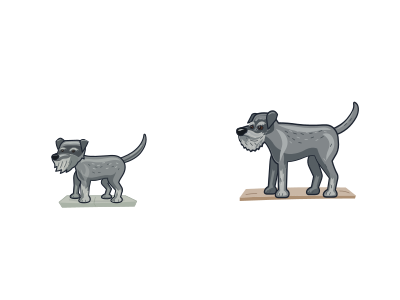
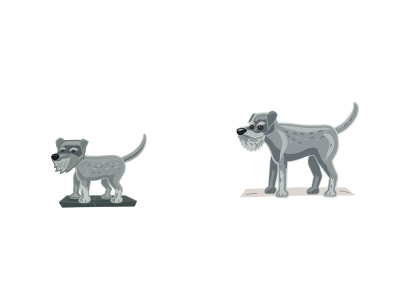
An exploration group
Schnauzer clade
Selected Parker et al. 2017 branch
The Giant Schnauzer belongs to a different group
Branches show genetic similarity, not direct ancestors or dated splits. Crossbreeding connects different branches.
Return to the tree of life →The Miniature and Standard Schnauzers were grouped together in this study. You might expect the Giant Schnauzer to join them because of its name. Instead, the study placed it in a different group called the Drover clade.
The branches show how similar the breeds are based on their DNA. Being neighbours on the diagram doesn’t show that one breed descended from the other. The branches don’t tell you when breeds split, either. Breeds on different branches can still have a history of crossbreeding, and the researchers looked separately for signs of that mixing.
Older standard-sized German working dogs contributed to the smaller Miniature and the larger Giant. Breeders also used other dogs. These histories describe how separate breeds developed; a shared name and similar coat do not require them to occupy the same genetic group.
Stable dogs
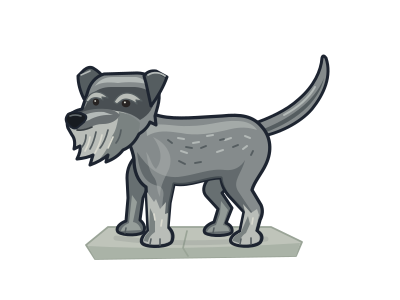
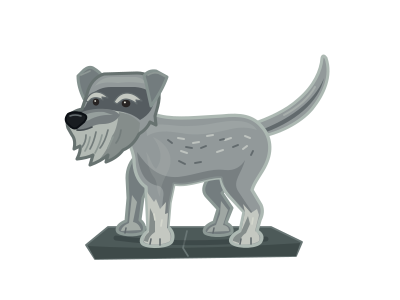
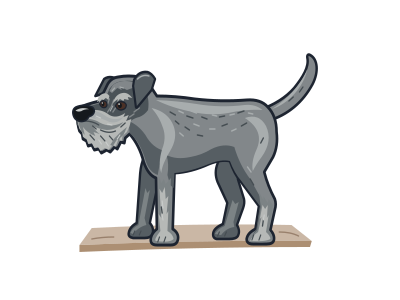
The Standard grew out of German working dogs used to catch rodents around horse stables.
A smaller breed
Around 1900, the early Miniature was known near Frankfurt as a rough-haired miniature pinscher. The exact mix used to develop it is uncertain.
Shared features
Both have a nearly square body, wiry coat, bushy eyebrows and a beard. Each has its own breed standard and history.
Explore this group
Study attribution
Parker et al. (2017), Cell Reports 19:697–708 · CC-BY-4.0. Selected clade membership and nested Figure 1 relationships restated as a new, simplified diagram. No photographs, branch lengths or bootstrap values copied.
Selected facts/group membership adapted; simplified layout and illustrations by Lifetree.