An exploration group
Newfoundland & close retrievers
Selected Parker et al. 2017 branch
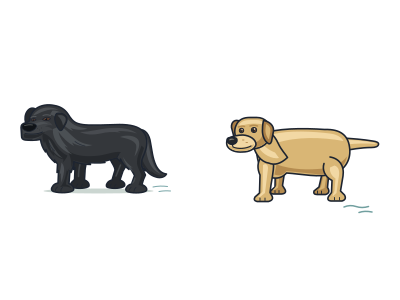
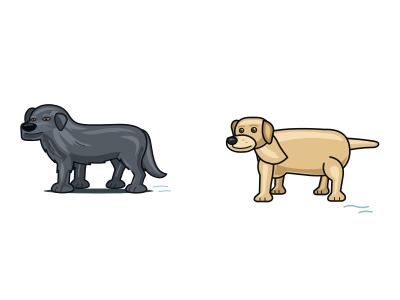
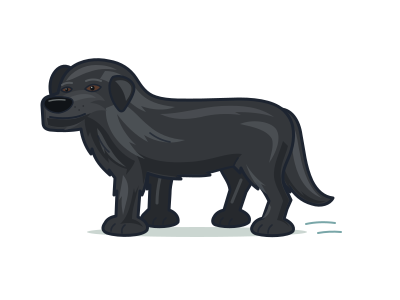
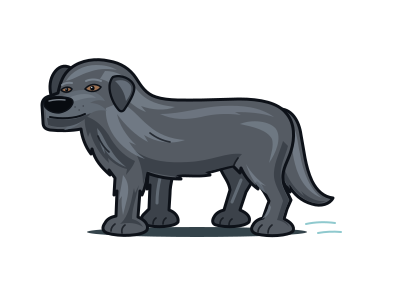
A shaggy giant beside three retrievers
Branches show genetic similarity, not direct ancestors or dated splits. Crossbreeding connects different branches.
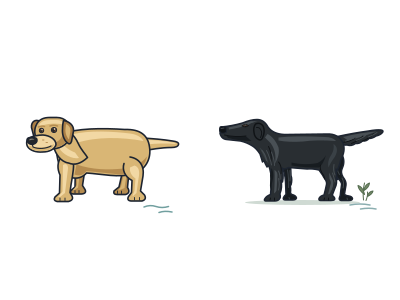
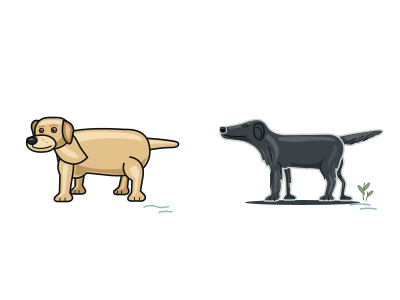
Return to the tree of life →The big, thick-coated Newfoundland sits near three retrievers in a study that compared DNA from 161 dog breeds. Lifetree’s study group picks out the Newfoundland and the Labrador, Golden and Flat-Coated Retrievers from the larger Retriever branch. The Curly-Coated Retriever and Nova Scotia Duck Tolling Retriever sit nearby on the diagram, outside this selection.
The branches show how similar the breeds were in the study. The diagram can’t tell us whether one breed came from another or when branches split. In a separate comparison, the researchers found signs that dogs from different branches had been crossed. Breed histories trace the Labrador back to St John’s water dogs from the island of Newfoundland.
Developing a breed isn’t the same as domestication. Dogs arose from ancient grey wolves long before these breeds were developed. Much later, people chose which already-domestic dogs to breed for particular jobs or looks.
Help on land and in water
Newfoundlands helped fishers, pulled loads and rescued people in water.
More than fetching
Some Labradors work as guide dogs or help find missing people.
Black or dark brown
The Canadian show standard calls for a glossy Flat-Coated Retriever coat in solid black or solid dark brown.
Explore this group
Study attribution
Parker et al. (2017), Cell Reports 19:697–708 · CC-BY-4.0. Selected clade membership and nested Figure 1 relationships restated as a new, simplified diagram. No photographs, branch lengths or bootstrap values copied.
Selected facts/group membership adapted; simplified layout and illustrations by Lifetree.