An exploration group
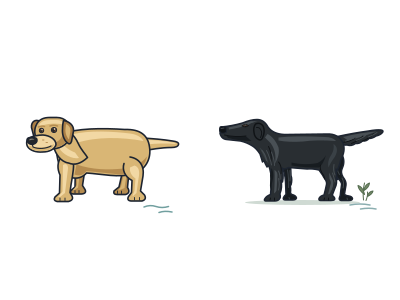
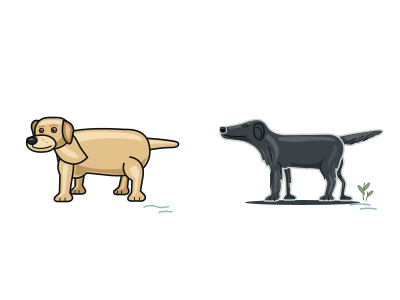
Labrador, Golden & Flat-Coated
Selected Parker et al. 2017 branch
Three familiar retrievers on one small branch
Branches show genetic similarity, not direct ancestors or dated splits. Crossbreeding connects different branches.
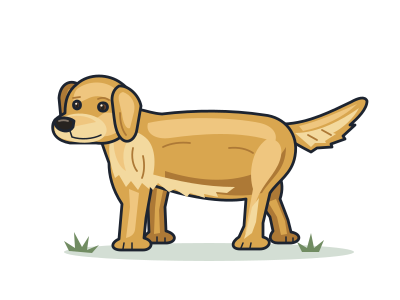
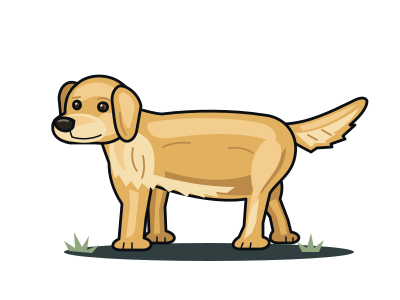
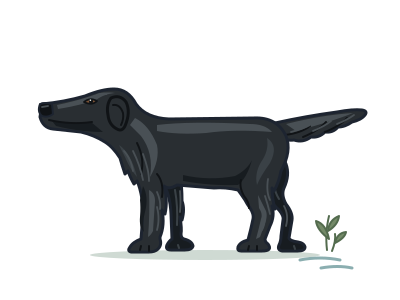
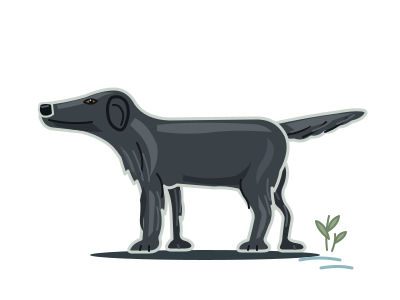
Return to the tree of life →The Labrador, Golden and Flat-Coated Retrievers sit together on a small branch within the study’s broader retriever group. The Newfoundland sits on the branch next door. The heading is our label for this study group, not a formal name or the name of an ancestral dog.
Being neighbours in the diagram doesn’t show that one breed came from another. Dogs from different branches can have pups together. In the Scottish Highlands, a yellow Wavy-Coated Retriever named Nous and a Tweed Water Spaniel named Belle had pups that helped found the Golden Retriever breed.
That’s breed development, not domestication. Dogs arose from ancient grey wolves and were already living alongside people before farming. Much later, people developed breeds by choosing which dogs would have pups. These were already domestic dogs. Breeders chose them for traits such as how well they hunted or how they looked.
A Labrador link to Newfoundland
The Labrador traces back to working dogs from the island of Newfoundland. Fishers used those dogs to help haul in lines and nets.
A closer look at the DNA
In a separate analysis, researchers found long stretches of shared DNA in Goldens and Flat-Coated Retrievers. That fits with historical accounts of how the Golden Retriever developed.
Beyond the retriever branch
The study compared DNA from about 1,350 dogs representing 161 breeds.
Explore this group
Study attribution
Parker et al. (2017), Cell Reports 19:697–708 · CC-BY-4.0. Selected clade membership and nested Figure 1 relationships restated as a new, simplified diagram. No photographs, branch lengths or bootstrap values copied.
Selected facts/group membership adapted; simplified layout and illustrations by Lifetree.