An exploration group
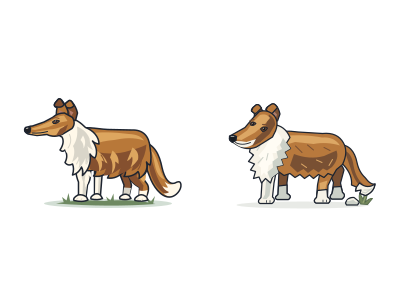
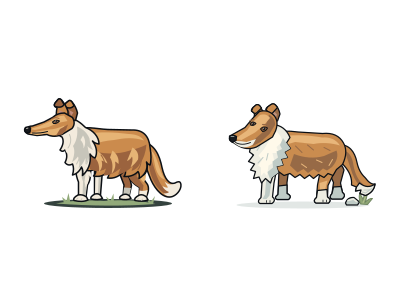
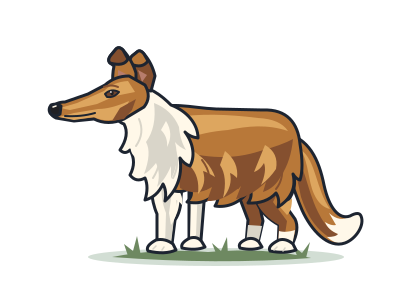
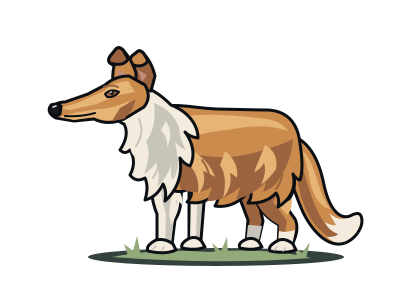
Collie & Shetland Sheepdog
Selected Parker et al. 2017 branch
Two sheepdogs on one branch, with corgis close by
Branches show genetic similarity, not direct ancestors or dated splits. Crossbreeding connects different branches.
Return to the tree of life →In the 2017 DNA study behind this diagram, the Collie and Shetland Sheepdog sit together on a small branch. The larger branch also includes the Pembroke Welsh Corgi and the Cardigan Welsh Corgi. This study group is named for the two breeds it shows. It isn’t an official group name or the name of an ancestral breed.
The branches group breeds by how similar their DNA is. They don’t show one breed as the ancestor of another or give dates for splits. Crossbreeding can also connect breeds on different branches, so the diagram doesn’t show every connection.
Developing breeds is different from domesticating dogs in the first place. People shaped breeds by choosing which dogs to breed among dogs that were already domesticated. The researchers suggest that people chose dogs for different jobs before putting more emphasis on how they looked. Where dogs lived and how they moved between places may also have helped shape breeds.
About 160 breeds
The study compared DNA from about 1,350 dogs across about 160 breeds.
A curve at the tip
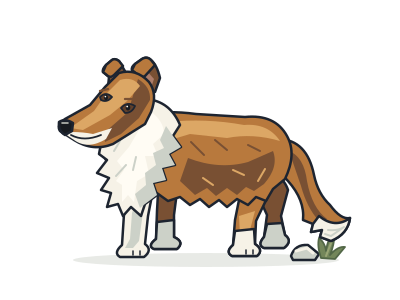
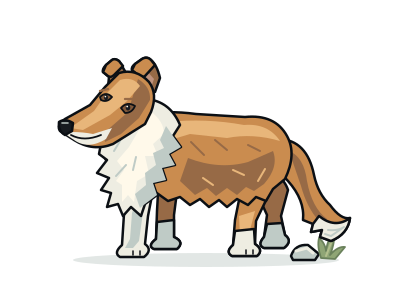
Both breed guides describe a slight upward curve near the tail tip. The Rough Collie’s tail hangs low at rest, while the Shetland Sheepdog’s tail is attached low on its body.
Gold to reddish brown
One coat colouring in Shetland Sheepdogs ranges from pale gold to deep reddish brown. Dogs with this colouring can also have white markings.
Explore this group
Study attribution
Parker et al. (2017), Cell Reports 19:697–708 · CC-BY-4.0. Selected clade membership and nested Figure 1 relationships restated as a new, simplified diagram. No photographs, branch lengths or bootstrap values copied.
Selected facts/group membership adapted; simplified layout and illustrations by Lifetree.