A domestic breed
Cardigan Welsh Corgi
Canis lupus familiaris
A Welsh working breed with a Pembroke connection
Branches show genetic similarity, not direct ancestors or dated splits. Crossbreeding connects different branches.
Return to the tree of life →Britain’s Kennel Club first registered both kinds of corgi under one name: Welsh Corgi. Breeders sometimes crossed the two. One Cardigan show champion, My Rockin Mawer, had a Pembroke father. That link comes from breed records, not from the diagram.
The Cardigan sits near the Pembroke, Collie and Shetland Sheepdog in the diagram. A 2017 study put all four in a wider group based on similarities in the dogs’ DNA. The branches don’t tell us whether one breed came from another or when breeds split. Crosses can link breeds on different branches.
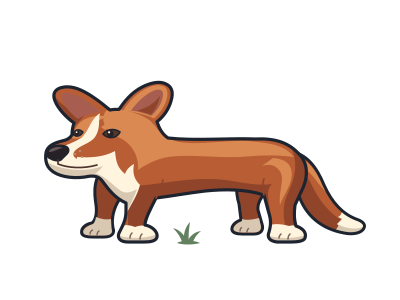
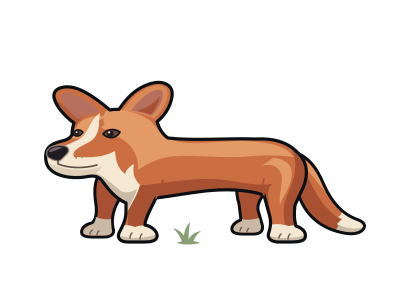
Look for a long, level back, a deep chest and short, sturdy legs. The front feet turn slightly outwards, and the large upright ears have softly rounded tips. The long, brushy tail hangs low when the dog stands and can lift as it moves.
Origins
The breed developed in the hills of historic Cardiganshire in west Wales. That area gave the Cardigan its name.
Original purpose
Welsh farmers used these dogs to drive cattle across shared grazing land. The dogs kept the cattle moving by nipping at their heels.
Recognition
Britain’s Kennel Club recognised the Cardigan and Pembroke as separate breeds in 1934.
Study attribution
Parker et al. (2017), Cell Reports 19:697–708 · CC-BY-4.0. Selected clade membership and nested Figure 1 relationships restated as a new, simplified diagram. No photographs, branch lengths or bootstrap values copied.
Selected facts/group membership adapted; simplified layout and illustrations by Lifetree.