An exploration group
Asian spitz clade
Parker et al. 2017
Japanese hunting dogs meet northern sled dogs.
Branches show genetic similarity, not direct ancestors or dated splits. Crossbreeding connects different branches.
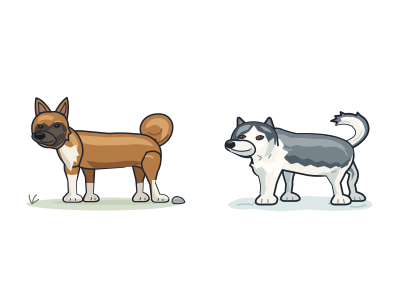
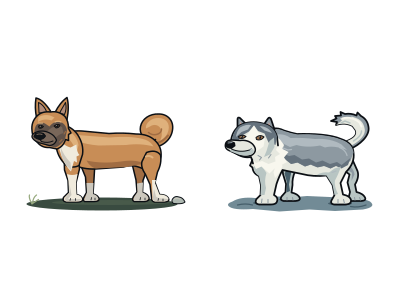
Return to the tree of life →This study group connects Japanese hunting dogs, northern sled dogs and the Tibetan Mastiff through similarities in DNA. Its six selected breeds here are the Akita, Shiba Inu, Siberian Husky, Alaskan Malamute, Greenland Dog and Tibetan Mastiff. Follow the nested branches to compare some of their closer relationships in the study. They are domestic dog breeds, not separate species, and do not represent the full group.
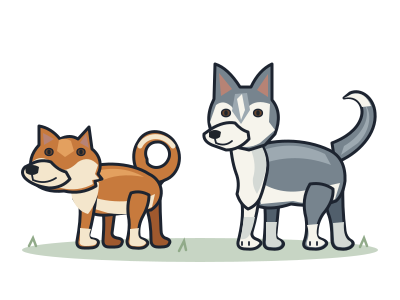
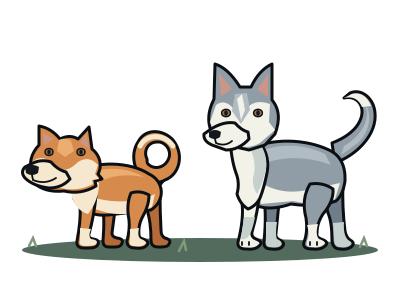
Their different backgrounds are part of the interest. The Shiba Inu was developed to hunt using sight and smell in thick mountain undergrowth. It has small upright ears and a thick tail curled or curved over its back. The Siberian Husky’s traditional work was quite different: pulling a light load at a moderate speed over long distances.
Read this display as a guide to genetic similarity, not a pedigree. These positions do not establish direct descent between neighbouring breeds. Crossbreeding has connected breeds across groups, so a branching tree cannot tell their whole story.
A wide-ranging study
The study’s main breed diagram covered 161 dog breeds and identified 23 supported groups.
Japan’s smallest native breed
The Shiba Inu is the smallest native Japanese dog breed.
Not always blue eyes
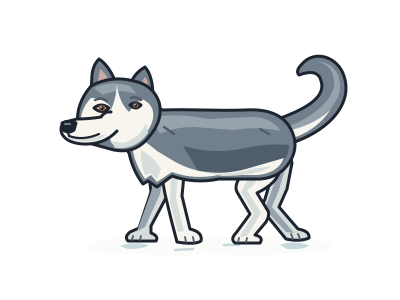
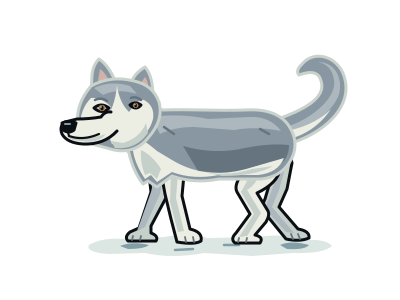
Siberian Huskies can have brown eyes, blue eyes, one of each, or more than one colour within an eye.
Explore this group
Study attribution
Parker et al. (2017), Cell Reports 19:697–708 · CC-BY-4.0. Selected clade membership and nested Figure 1 relationships restated as a new, simplified diagram. No photographs, branch lengths or bootstrap values copied.
Selected facts/group membership adapted; simplified layout and illustrations by Lifetree.