A domestic breed
Tibetan Mastiff
Canis lupus familiaris
A Himalayan guardian with sled dogs as neighbours on the tree
Branches show genetic similarity, not direct ancestors or dated splits. Crossbreeding connects different branches.
Return to the tree of life →Two Tibetan Mastiffs reached London Zoo in 1828. In 1847, Lord Hardinge sent a male to Queen Victoria. The international breed standard records an early litter born at Berlin Zoo in 1898. From 1970, dogs brought from Nepal and India helped establish breeding programmes in the United States.
The branches show selected DNA similarities from a 2017 study. The Tibetan Mastiffs sampled in China and the United States formed separate groups within the breed. The diagram does not show neighbouring breeds as ancestors or descendants, and it does not date splits. Across the study, researchers found evidence that many dog breeds had been crossed with others.
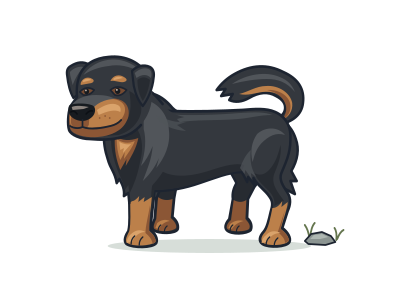
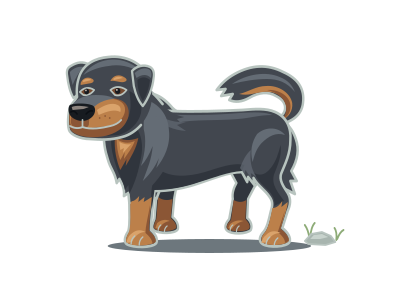
Look for a sturdy dog with a broad head, a deep, square-ended muzzle and triangular ears that hang forward. Longer fur forms a mane around the neck and shoulders, especially in males. An alert or moving dog typically carries its bushy tail curled over its back.
Origins
Colonel and Mrs Bailey brought Tibetan Mastiffs to Britain in 1928. In the 1930s, Mrs Bailey helped set up the Tibetan Breeds Association, and Britain’s Kennel Club adopted its first written description of the breed’s ideal features.
Original purpose
In Tibet, these dogs guarded homes, monasteries and herders’ camps. They were often tied to gates or camp stakes by day and let loose to guard at night.
Recognition
The international dog federation known as the FCI formally recognised the breed in 1961. The breed already existed long before that decision.
Study attribution
Parker et al. (2017), Cell Reports 19:697–708 · CC-BY-4.0. Selected clade membership and nested Figure 1 relationships restated as a new, simplified diagram. No photographs, branch lengths or bootstrap values copied.
Selected facts/group membership adapted; simplified layout and illustrations by Lifetree.