An exploration group
British Shorthair & Longhair
Selected breed-development histories
A shared breeding history, with different coats
Branches combine study-specific genetic affinities and documented breed-development histories. They are browsing groups, not a complete pedigree or dated evolutionary tree. Crossbreeding connects different branches, and similar coats can arise independently.
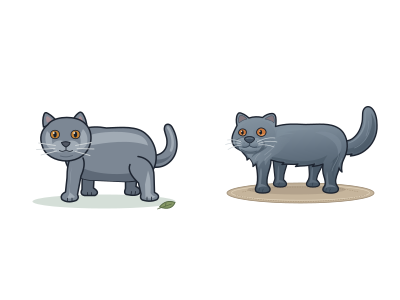
Return to the tree of life →British Shorthairs and British Longhairs share a breeding history, despite their different coats. Persian cats were crossed into British breeding programmes, contributing long hair. Longhaired kittens appeared within those programmes, rather than belonging to a wholly separate breeding story.
That shared history matters when reading breed names. Organisations that recognise cat breeds do not necessarily treat the longhaired form in the same way. Later recognition for showing should not be mistaken for the first appearance of longhaired British cats.
Here, the two breeds sit together as a browsing group, not a species. The diagram is not a complete family record, and neighbouring breeds are not shown as ancestors and descendants. Documented Persian crosses remain part of their history. But similar coats can arise independently, so long hair alone cannot identify ancestry. It does not mean every longhaired cat has Persian ancestry.
A shared shape
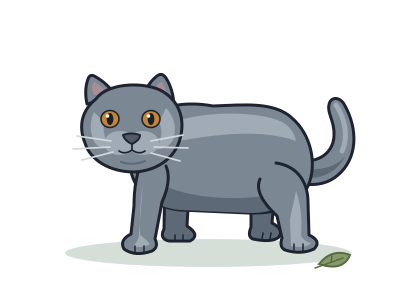
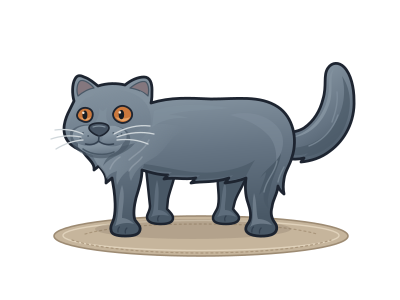
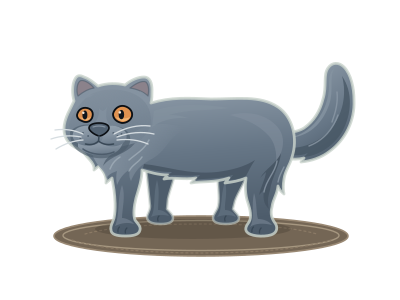
Both breeds have sturdy bodies and broad, round faces.
Recognition in 2009
The International Cat Association (TICA) granted British Longhair championship status from May 2009.
A landmark show
The Crystal Palace cat show in 1871 was a landmark in British Shorthair breeding and showing.
Explore this group
Study attribution
Gandolfi et al. (2018), Scientific Reports 8:7024 · CC-BY-4.0. Original explanation of study-specific similarity; editorial group headings are explicitly not clades or geography of origin. No study photos imported.
CFA, TICA and GCCF breed histories. Original summaries of documented breeding programmes and registry distinctions. Per-page sources identify the relevant breed histories; no standards, source prose or photographs reproduced.
Gandolfi et al. (2010): Sphynx and Devon Rex mutations in KRT71. Independent factual explanation of distinct coat variants, not a breed pedigree. No source imagery or text reproduced.
Selection Signatures Reveal Candidate Genes for the Cornish Rex Breed-Specific Phenotype (2024). Factual contrast between LPAR6-associated Cornish coat and KRT71-associated Devon/Sphynx coats. No figures or measurements copied.
Selected facts/group membership adapted; simplified layout and illustrations by Lifetree.