A domestic breed
Coton de Tulear
Canis lupus familiaris
Madagascar’s cotton-coated dog sits beside the poodle on this DNA tree.
Branches show genetic similarity, not direct ancestors or dated splits. Crossbreeding connects different branches.
Return to the tree of life →Old accounts describe small dogs roaming freely in Madagascar. They don’t tell us which dogs went on to found the breed we know today. The historical record is clearer later on: dogs of the breed were brought from Madagascar to France before formal recognition.
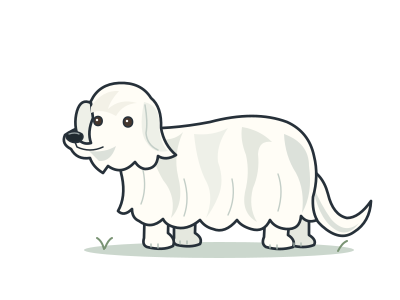
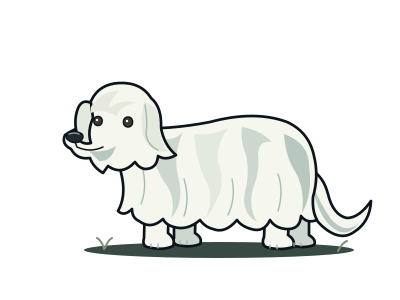
An adult is small and sturdy, with a body longer than it is tall. Its ears hang close to its cheeks. The long, soft coat can fall in slight waves rather than tight curls. It looks white overall, though the ears can have a faint grey or pale tan tint.
The branches show similarities in DNA, not which breeds came from which or when they split. Dogs from different branches can be crossed, so the diagram neither proves nor rules out any particular cross in the breed’s history.
Origins
Its French name means ‘cotton of Tulear’. It refers to the coat and to the port in Madagascar now called Toliara.
Original purpose
Its documented early role was as a companion. In France, people kept these dogs for company before the breed was officially recognised.
Recognition
The international dog federation known as the FCI formally recognised the breed in 1970. That was a registry decision, not the year the breed first appeared.
Study attribution
Parker et al. (2017), Cell Reports 19:697–708 · CC-BY-4.0. Selected clade membership and nested Figure 1 relationships restated as a new, simplified diagram. No photographs, branch lengths or bootstrap values copied.
Selected facts/group membership adapted; simplified layout and illustrations by Lifetree.